 Author Dan Wang has just released a new book (Breakneck: China's Quest to Engineer the Future, W.W. Norton, 2025). Wang, a Canadian by birth, is a research fellow at the Hoover Institution at Stanford University, a technology analyst and social critic. Known for his detailed annual letters on China, he has lived in many different countries and is a frequently cited expert on China's technology and social culture. He has contributed essays to publications like The New York Times and Foreign Affairs. Wang previously worked in China as a technology analyst and at the Yale Law School's Paul Tsai China Center. His new book contrasts the world's two major competing powers (China and the United States) in their competition for world hegemony and is a penetrating and insightful examination of the two nations' divergent social governance philosophies.
BREAKNECK: CHINA’S QUEST TO ENGINEER THE FUTURE
Review and analysis of a new book by author Dan Wang
Analysis of Dan Wang's Breakneck: China's Quest to Engineer the Future
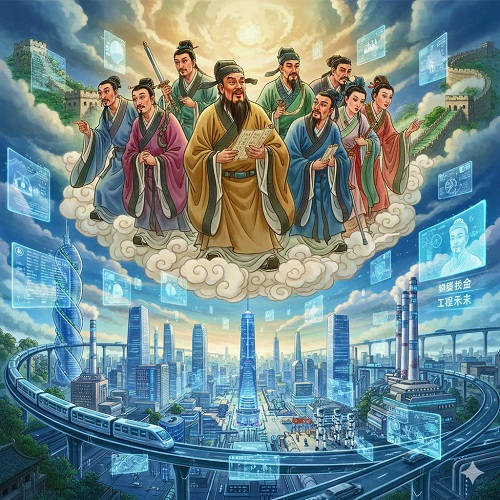
Dan Wang's provocative book, Breakneck: China's Quest to Engineer the Future (W.W. Norton 2025), offers a compelling and often unsettling analysis of the civilizational race for technological supremacy between the United States and China. Wang's central thesis posits that the fundamental difference between the two powers lies in their governing philosophies and elite composition: China is an "engineering state," and the United States is a "lawyerly society." This core distinction profoundly shapes their capacity for rapid development, innovation, and long-term strategic planning, with Wang ultimately suggesting that the U.S. must learn to "build more" and "obstruct less" to remain competitive (Wang, 2025).
The Engineering State vs. The Lawyerly Society
Wang's most powerful contribution is the framing of this rivalry as a clash between two deeply ingrained cultural and systemic approaches to governance and progress.
China: The Engineering State
In China, the governing elite, historically and presently, is dominated by engineers and technocrats. All nine members of the Chinese Politburo's Standing Committee, as of 2020, for example, had training as engineers (Source 7.3). This dominance cultivates an "engineering state" characterized by a relentless focus on construction, execution, and large-scale, long-term physical transformation.
- Construction at Breakneck Speed: The Chinese system prioritizes a "get-it-done" attitude, leading to monumental infrastructure achievements at unparalleled speed and scale. Examples include building the Beijing-Shanghai high-speed rail in three years for $36 billion, possessing a high-speed rail network longer than the rest of the world combined, and constructing new cities the size of New York and Boston every year for 35 years (Source 1.3). This focus on the "real economy"—on manufacturing and physical things—is a conscious strategic choice, contrasting with America's focus on software and intangible technology (Source 1.1).
- The View of the Human as a Mass: A critical, and chilling, component of the engineering state is its willingness to engage in social engineering with minimal regard for individual rights. In this worldview, the population is viewed as a mass that can be molded to meet scientific, economic, and technological expectations. Wang highlights the disastrous yet consequential policies that exemplify this approach, such as the One-Child Policy and the Zero-COVID policies (Source 1.1, 7.1). These actions, involving forced sterilization and coercive abortions in the case of the former, and draconian lockdowns in the case of the latter, are presented as the "expected outcomes" of an engineer-run state that prioritizes the collective goal (e.g., population control, disease eradication) over the individual citizen's autonomy and well-being (Source 7.1). The modern-day manifestation is the pervasive Social Credit System (SCS), which semi-automatically evaluates, monitors, and punishes citizens, thereby turning them into "data segments to be evaluated by the state" and ensuring an "invisible infrastructure of control" (Source 4.3, 2.3).
- Process Knowledge and Technological Dominance: The ceaseless focus on manufacturing and building has allowed China to accumulate vast "processknowledge"—the cumulative, hands-on expertise in how to actually make things (Source 2.2). This has led to dominance in critical industries like electric vehicles (EVs), robotics, green energy (building a third to a half of global solar and wind capacity annually), and a growing military capacity, including a naval buildup (Source 1.3, 2.2).
The United States: The Lawyerly Society
The United States, by contrast, is a "lawyerly society," where legal professionals dominate the political leadership and public discourse (Source 1.3). The system is fundamentally structured around a legal-centric approach, prioritizing proceduralism, litigation, and the protection of individual human rights.
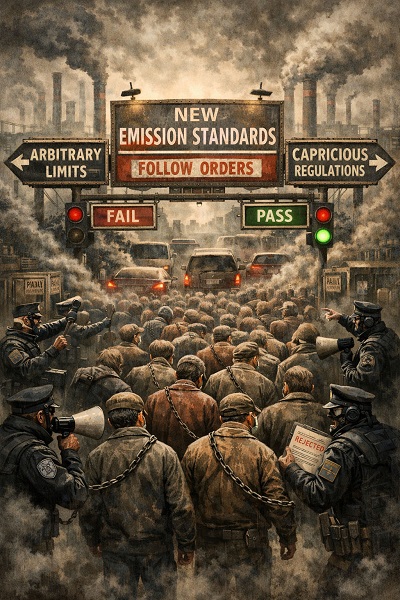
- The Stifling Power of Obstruction: While the rule of law is a cornerstone of democracy, Wang argues that this system has devolved into a "vetocracy" that excels at obstruction and delay (Source 7.1). Essential large-scale projects, such as infrastructure, are often stalled or abandoned due to layers of litigation, environmental impact reviews, and fragmented governance. The contrast is stark: California’s San Francisco-Los Angeles high-speed rail project has taken 17 years, cost $128 billion, and remains incomplete, illustrating the economic and societal stagnation that results from the U.S. system's inability to execute (Source 1.3).
- Focus on Individual Rights and Socio-Economic Difficulties: The American system's primary focus on individual human rights and its inherent skepticism of government power, while a moral bulwark, creates socio-economic liabilities in the face of a ruthless, long-term competitor like China. The U.S. struggles to coordinate long-term national planning—often confined to short-term election cycles—and suffers from a decline in manufacturing capacity and "process knowledge" due to decades of outsourcing and prioritizing intangible assets like software and finance (Source 2.2, 7.1). This fragmentation and procedural obsession result in decaying infrastructure, a loss of industrial dynamism, and a struggle to rapidly mobilize for national technological goals (Source 1.3, 2.2). The failure to rebuild and maintain the physical world compromises America's long-term economic and geopolitical security.
- A Legalistic Response to a Technical Challenge: Wang critiques the U.S. reaction to China's technological rise as being excessively "legalistic," relying heavily on tariffs, export controls, and investment restrictions (Source 7.1). This lawyerly offensive, aimed at cutting off China from key American suppliers (like advanced chips), has ironically encouraged Beijing to redouble its efforts toward technological self-sufficiency, potentially accelerating its domestic innovation (Source 7.1)
The Educational system: Nurturing Engineers vs. Cultivating Liberalism
The stark difference in governance philosophy is mirrored and reinforced by the respective national education systems.
The Chinese Educational System: The Assembly Line for the State
The Chinese educational system is a highly centralized, rigorous, and intensely competitive machine designed to serve the needs of the engineering state by selecting and cultivating technical talent.
- Goal: Talent Selection and Supply: The primary historical goal, a modern continuation of the imperial examination system, is to ensure talent supply for the state and improve the overall educational level of the public (Source 5.1). The system is highly focused on theoretical knowledge and academic performance as the sole criteria for success (Source 5.2).
- Centralized and Rigid: Education is centrally controlled, providing free, universal, and comprehensive basic education, and features a pervasive, high-stakes college entrance examination system (the GaoKao) that acts as a national sorting mechanism (Source 5.1). The curriculum often shows a "rigid obsession with the basics," ensuring a high floor of technical competence across the populace (Source 5.2).
- The Liability: While this system effectively produces a vast, highly-skilled technical workforce—the very engineers who run the state—it is often criticized for its limitations in fostering the creative, innovative, and critical thinking skills that thrive in more open-ended environments. The reliance on an "expected assembly line model" can stifle intellectual freedom and originality (Source 5.2).
The American Educational System: The Liberal Model
The American system, by contrast, is decentralized and historically rooted in ideals of religious dissemination, freedom, and critical thinking (Source 5.1). It is an expression of the lawyerly society’s emphasis on pluralism and individual development.
- Goal: Individual Growth and Critical Thought: American education generally aims to be a way for students to "grow up," with an emphasis on cultivating students' critical and innovative thinking (Source 5.1, 5.2). It offers a more diverse curriculum, promotes student-led inquiry, and does not use academic achievement as the sole measure of a student's worth (Source 5.2).
- Fragmentation and Liberal Drift: The system is fragmented across local, state, and private institutions, and in the context of Wang's critique, is heavily influenced by neoliberal ideas and often profit-oriented (Source 5.1). The "problematic nature of the liberal American educational system" lies in the argument that its focus on social-emotional learning, diversity of curricula, and critical theory may be coming at the expense of a rigorous, nationally aligned focus on STEM fields and technical excellence necessary for great-power competition. This is often framed as a broader cultural drift away from the hard, physical reality of the "real economy" and toward the more abstract, often litigation-heavy world of law, finance, and digital platforms—the very sectors Wang sees as contributing to the nation's stagnation.
- The Liability: While the American system is excellent at fostering radical innovation (giving rise to companies like Google and Apple), its lack of a uniform, centralized, and technically-focused curriculum is seen as a liability in a race against a state explicitly organizing its entire educational structure to churn out legions of technically proficient workers ready to execute national industrial policy.
Conclusion and Implications
Dan Wang's Breakneck is an essential warning to the United States. He is not dismissive of the values of the lawyerly society; he personally returned to the U.S. because he "missed pluralism" and the ability to order books and live in a society with many voices (Source 2.1). He acknowledges the "terrible human cost" and "cruel aberrations" that come with the Chinese engineering state, such as environmental damage and the persecution of ethnic minorities (Source 1.1, 2.3, 7.1).
However, the book's stark contrast highlights the core liabilities of the American social approach: when faced with a political system that has no compunctions about molding human beings to conform to technological expectations, a society paralyzed by proceduralism, litigation, and short-termism will fall behind. The technological and geopolitical competition is ultimately a test of which system can build more, better, and faster.
Wang's conclusion is a call for the U.S. to seek an "appropriate balance between lawyers and engineers," to invite some of the "engineering state's" dynamism and "do away with some procedural obsession" while still safeguarding its core liberal, rights-focused values (Source 1.1). The solution is not to become China, but to selectively re-engineer American society and policy to regain its lost capacity for physical dynamism and long-term execution.
APPENDIX I:
Historical Roots: The Diverging Elites
The foundational difference between the "engineering state" and the "lawyerly society" lies in the distinct historical development and composition of their ruling elites.
China: From Revolutionaries to Engineers
China's leadership was shaped by the practical demands of nation-building and Communist Party ideology.
- Engineering the Nation: Following the founding of the People's Republic, the massive task of industrialization, infrastructure construction, and resource management naturally elevated individuals with technical and engineering backgrounds. Figures like Mao Zedong and Deng Xiaoping, while political leaders, oversaw colossal projects requiring technical planning. This trend solidified under subsequent leaders; by the time of the Politburo's Standing Committee in recent years, all nine members had degrees in engineering or other technical fields (Source 7.3, 1.2).
- Engineering as Governance: In this system, engineering isn't just an occupation; it's a governance philosophy. It views society itself as a system to be optimized, managed, and controlled through large-scale, top-down implementation, leading to the "social engineering" that characterizes their most controversial policies (Source 1.1).
The U.S.: The Lawyerly Backlash and Decline of the Builder State
The U.S. was arguably once an "engineering state," but it underwent a significant shift towards legal dominance and proceduralism.
- The Original Builders (1850s–1950s): The United States' golden age of growth, which saw the building of transcontinental railways, canals, the interstate highway system, and mega-projects like the Manhattan Project and the Apollo program, was driven by a powerful builder spirit (Source 1.1).
- The Backlash (1960s–1970s): Wang argues that the U.S. "engineering state" made critical mistakes, such as urban planners like Robert Moses ramming highways through dense neighborhoods and the environmental damage caused by pesticides like DDT (Source 1.1). This generated a powerful public backlash against unchecked government engineering power.
- The Rise of the Lawyer-Politician: This public reaction, coinciding with the rise of modern environmentalism and the increasing complexity of a regulatory state, created fertile ground for a "lawyerly society." Lawyers, who specialize in procedure, process, and mediation, replaced engineers at the highest levels of power. The U.S. was established by lawyers—the Declaration of Independence reads like a legal document—but the dominance intensified. While lawyers in Congress have actually declined from a peak of around 80% in the mid-19th century to under 40% today, they still overwhelmingly dominate the highest tiers of the political elite, particularly in the Senate and key executive positions (Source 4.1, 1.2). This shift fundamentally re-oriented the national mindset from "getting things built" to "getting things right" (procedurally), even if it means nothing gets built at all.
Liabilities in Practice: America's Gridlock
The lawyerly society's focus on litigation and procedural obstruction creates tangible socio-economic liabilities, most visibly in infrastructure and housing.
1. The Infrastructure Stagnation
The U.S. system enables a "vetocracy"—a system where any sufficiently motivated minority can veto or block major projects—which is directly responsible for America's aging and prohibitively expensive infrastructure:
- The NEPA Problem: The National Environmental Policy Act (NEPA) and related state regulations are central to Wang's critique. While NEPA is a vital defense for environmental protection, its complexity allows opponents of a project to delay it through years of lawsuits and environmental impact statement (EIS) reviews. For major energy and transportation projects, predevelopment litigation is significant, often challenging the NEPA process itself (Source 5.2). Even when agencies win the lawsuits (which they often do), the litigation process and subsequent delays—which can drag a solar project on for eight years or more—can cause projects to be terminated or become economically unviable (Source 5.1).
- The California High-Speed Rail Fiasco: This is the canonical example in Breakneck. The ongoing attempt to build high-speed rail between San Francisco and Los Angeles has taken 17 years, ballooned to over $128 billion (and rising), and remains incomplete (as of this date, crucial railway infrastruture remains unbuilt and no trackbed has been completed)—a stark contrast to China's ability to build similar-scale projects in a fraction of the time and cost (Source 1.3).
- Local Obstruction (NIMBYism): At the local level, the power of the "lawyerly society" manifests as Not-In-My-Backyard (NIMBY) obstructionism, particularly on housing. Endless zoning reviews and procedural obstacles allow wealthy and well-connected residents to block new construction, leading to chronic housing shortages, skyrocketing rents, and greater inequality (Source 1.2, 2.3).
2. Loss of "Process Knowledge" and Manufacturing Edge
The lawyerly elite's focus on finance, intellectual property, and service economies, coupled with a belief that the "real economy" could be offshored, led to a critical loss of "process knowledge"—the hands-on, iterative expertise gained from actually building and refining physical products (Source 1.1, 3.2).
- China's Advantage: China's relentless focus on manufacturing has allowed its workers to accumulate this knowledge, enabling them to quickly pivot from assembling iPhones to manufacturing advanced products like drones and dominating the EV market (Source 1.1, 2.1).
- The U.S. Handicap: The U.S. now struggles to re-establish domestic manufacturing, not just because of cost, but because it has lost the collective know-how and the dense ecosystem of component suppliers that China possesses (Source 3.2, 2.1).
Wang's Prescription: Reclaiming the Builder Spirit
Wang's critique is not an endorsement of authoritarianism, but a plea for the U.S. to inject a necessary "engineering ethos" into its governance to remain dynamic and competitive.
Wang's proposed solutions center on rebalancing the system, encouraging abundance, and prioritizing execution:
- Introduce More Engineers to Governance: The U.S. needs more cognitive diversity in its leadership. Wang suggests the U.S. government should actively recruit more individuals with STEM backgrounds and technical expertise into policy-making roles to counterbalance the lawyerly dominance (Source 1.2, 3.2). This would shift the focus toward outcomes and buildability, rather than perpetual process and obstruction.
- Streamline the Build Process: The U.S. must reduce bureaucratic paralysis and streamline regulatory processes, particularly NEPA and local zoning laws. Wang is not suggesting abandoning environmental or democratic protections, but rather reaching a level of efficiency seen in other free-market democracies like France, Japan, or Spain. He notes that cutting the process from five years to "maybe one or two years would be a big improvement" (Source 2.3, 3.2).
- Embrace Abundance and Manufacturing: The U.S. should consciously re-prioritize the "real economy" of building physical things over the "fictitious economy" of financialization and purely digital platforms. Initiatives like the CHIPS Act, which subsidizes domestic semiconductor production, represent a step toward adopting the kind of state-directed industrial policy that has successfully driven China's green growth and technological leap-frogging in EVs (Source 2.2, 6.1).
- Adopt a "Developing Country" Mindset: Wang suggests the U.S. should copy China's 2023 slogan—"China will always be a developing country"—as a way to reject the complacency of a mature power and reclaim the dynamism and ambition of a nation focused on relentless self-improvement and construction (Source 6.2).
Wang summarizes his ideal balance as needing "20% more engineering" in the U.S. to ensure new infrastructure and housing, while China needs "50% more lawyerly protections" to safeguard its citizens from the excesses of social engineering (Source 3.1, 3.3). This mutual learning is the only sustainable path forward for both great powers.
APPENDIX II:
A video discussion about the author, Dan Wang's book, Breakneck: China's Quest to Engineer the Future and a discussion of the lawyerly society versus the engineering state. A new theory of China's rise: rule by engineers. (48 minutes in length)
References and Sources:
- Wang, Dan. Breakneck: China's Quest to Engineer the Future. W. W. Norton & Company, 2025 (as cited in multiple search results).
- "On the Optimal Ratio of Engineers to Lawyers: A Review of Dan Wang's Breakneck." The Sling, (Source 1.1).
- "Breakneck by Dan Wang | Summary, Quotes, FAQ, Audio." SoBrief, (Source 1.3).
- "'Breakneck' Review: Lawyers vs. Technocrats." American Enterprise Institute (AEI), (Source 2.1).
- "Book Review: Breakneck – China's Quest to Engineer the Future." Financial Sense, (Source 2.2).
- "From Datafication to Data State: Making Sense of China's Social Credit System and Its Implications." Law & Social Inquiry - Cambridge University Press, (Source 4.3).
- "Comparative Analysis of China-US Education System: Analysis to General Situation and Typical Image." ResearchGate, (Source 5.1).
- "Will China's breakneck growth stumble?" UnHerd, (Source 7.1).
- "Breakneck: China's Quest to Engineer the Future - Wikipedia." (Source 7.2).
-------------------------------------------
POSTSCRIPT (8 Nov 25)
SPECTATOR Magazine columnist Gavin Mortimer yesterday penned a brief commentary concerning the recent successful election of Islamic Communist socialist Zohran Mamdani. Aside from confirming what we've all suspected for far too long (that New York City is collectively insane), he raises the interesting question of the corelation of age to political extremism.
The French Left (among others) seems to be ecstatic about Mamdani's victory, but more to the point is Mortimer's observation that Mamdani is the new darling of Gen Z (technically defined as those born between 1997 and 2012).
This is not too surprising, given that Gen-Z cut they/their baby teeth on digital and social media and the fact that they are still very young, intellectually quite immature and yet full to the brim with all the restless impatience of burning idealism, and a desire for instantaneous resolution of all their chief gripes and complaints about American society and culture (i.e. 'immediate gratification', fostered mainly by American consumerism and powerful corporate 'wish-fulfillment' mechanisms, amplified and fanned in turn by social media modalities).
It's no great mystery for anyone who has studied (even briefly) the human maturation curve that one of the major problems associated with still being wet behind the ears is the fact that greater understanding of the (essentially brutal) world we exist in is only acquired through experience...not through taking to heart higher education courses in which some radical leftist progressive teacher or professor indoctrinates his/her students in highly idealistic social theories and hypotheses (such as Marxist Communism or Marcusian-Marxist subjunct ideologies).
In other words, it is youth's "job" to expect the unrealistic, idealise and fastasise about immediate solutions that several thousands of years of human civilisation have clearly demonstrated are as laughable as rubber dog sh*t. This deeper understanding only comes about if one somehow manages to survive the hormonal chaos of youthfulness and reach an older age (which in itself enables 'deeper understanding' to obtain).
It is the "job" of older people to help those who are younger acquire some of that age-induced understanding while still young (something that many older people and too many parents have simply given up on), so as to take advantage of acquired wisdom in the living of their own lives.
Sadly, our collective social culture seems to have more or less failed in keeping youth's excesses and expectations within the bounds of reason...a deleterious stance that seems to have come into its own within the last 30 or so years (the "Not my circus, not my monkeys" attitude).
This is not the case in Dan Wang's People's Republic of China, where absolute social control has long been the norm (only recently lessened somewhat, but still inextricably woven into the tapestry of greater contemporary Communist Chinese society). Toward that end, Wang, at the end of his excellent book, suggests several crucial changes that need to be made in both American and Chinese societies if the two nations are to continue to coexist more or less compatibly in the immediate future.
He also cites the fact that in China's 'engineering-focused' culture, education (alongside social conditioning) is the key to what he cites as 'process knowledge retention' and economic productivity, and cites China's extremely demanding standards of academic achievement. Contrast this to the lamentably low educational capabilities of our American students (below the level of college, but also above it).
Whenever I see pictures of the usual crowds of social protestors who flock to public demonstrations in America, I find myself reflexively curling my lip as I gaze upon these masses of social 'losers' and youthful social dregs. As motley a crowd of unp roductive drones as one could ever hope to come across in our society. To round things out, scattered here and there are the (mostly female) older individuals, stopped thinking critically decades ago!
These crowds are not rocket scientists (or even potentially efficient future sanitation workers, LoL). Grossly overweight, rather unremarkably lusterless individuals with brightly, multi-colored hair, grass-hyped stares and dulled-down, unreflective faces. Yup! Losers, one and all!
The majority typically are young people who have been assured that their political idols will provide them all with 'free stuff' and redistribute the wealth of successful individuals to the less well off (applied Marxism, of course, which has never, ever been socially equitable by any reasoned reckoning).
At such moments, I find myself thinking of Wang's China's population of youthful overachievers and strivers, bemoaning the fact that unless we immediately take some major steps to constrain our blind, materialist consumerism and start working together to achieve social and economic greatness again, we are...utterly...doomed.
Again, read Dan Wang's book. It's an epiphanic moment waiting to burst forth upon you!
|