I love your range of lyrical subjects. Gödel is a good example. I believe he is right, because I find that poets here have a great deal of struggle with their perception of what truth is. I don't seem to have that kind of problem, being content with the way things are and having a mind that is as flexible as young people on most accounts. What is true today, may be proven wrong tomorrow. I love the possibility of finding and accepting new truth.
Your lyrics, in this case make for a pretty rowdy song. Once again, would love to hear it played by a hard rock band.
from Judy Jones and William Wilson, "An Incomplete Education"
In 1931, the Czech-born mathematician Kurt Gödel demonstrated that within any given branch of mathematics, there would always be some propositions that couldn’t be proven either true or false using the rules and axioms … of that mathematical branch itself. You might be able to prove every conceivable statement about numbers within a system by going outside the system in order to come up with new rules and axioms, but by doing so you’ll only create a larger system with its own unprovable statements. The implication is that all logical system of any complexity are, by definition, incomplete; each of them contains, at any given time, more true statements than it can possibly prove according to its own defining set of rules.
Gödel’s Theorem has been used to argue that a computer can never be as smart as a human being because the extent of its knowledge is limited by a fixed set of axioms, whereas people can discover unexpected truths … It plays a part in modern linguistic theories, which emphasize the power of language to come up with new ways to express ideas. And it has been taken to imply that you’ll never entirely understand yourself, since your mind, like any other closed system, can only be sure of what it knows about itself by relying on what it knows about itself.
This book presents a narrative story of one person's journey of transcendental Awakening and Enlightenment as guided by his two Sage companions. It is grounded in Zen Buddhist and Taoist perspective and uses the I Ching as its structural framework. T
This book chronicles an infinite allegoric odyssey of Absolute Awakening in which a learned man, a mute man, and a recluse woman are the principal players. The mute and the recluse are the learned one's Teachers and Guides on his journey of Enlighten
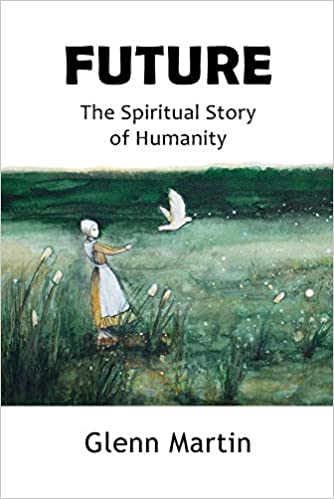
Histories of the world are generally written to either celebrate technology and science, or to herald doom. My book examines the path of the spirit in the onward rush.


 Share
Share Print
Print Save
Save Follow




Your lyrics, in this case make for a pretty rowdy song. Once again, would love to hear it played by a hard rock band.
Ron
In 1931, the Czech-born mathematician Kurt Gödel demonstrated that within any given branch of mathematics, there would always be some propositions that couldn’t be proven either true or false using the rules and axioms … of that mathematical branch itself. You might be able to prove every conceivable statement about numbers within a system by going outside the system in order to come up with new rules and axioms, but by doing so you’ll only create a larger system with its own unprovable statements. The implication is that all logical system of any complexity are, by definition, incomplete; each of them contains, at any given time, more true statements than it can possibly prove according to its own defining set of rules.
Gödel’s Theorem has been used to argue that a computer can never be as smart as a human being because the extent of its knowledge is limited by a fixed set of axioms, whereas people can discover unexpected truths … It plays a part in modern linguistic theories, which emphasize the power of language to come up with new ways to express ideas. And it has been taken to imply that you’ll never entirely understand yourself, since your mind, like any other closed system, can only be sure of what it knows about itself by relying on what it knows about itself.