Friends Lie: Writer’s Dilemma
Not willing to hurt one’s feelings,
“Oh, yes!” I’ve been told so many times,
so many times over the years.
“Oh, yes!” They would say.
“Really?” I'd ask.
“Yes...
Yes, really, I did!”
Friends new and old
would say throughout
the twenty and four years taken
to have the first book published.
“Oh, yes!”
“Really?”I would question.
“Yes...
Yes, really, I did!”
Do they tell the truth?
my mind would ask.
After all no one wants to hurt you.
Writers!
We,
you and I
pour our souls
into what we write
into what we create
into what we bring life onto
Friends do not want to hurt you.
I do not want to hurt you so,
“Yes?" They'd question.
Oh, yes!” I’ve said when reading
the words I know had been
mulled over, thought over and
pulled from the Poet’s Handbook
or a Random House Thesaurus
then written and re-written.
“Yes!" I would say.
“Really,” they would ask.
Really, you really like it?”
“Oh, yes!
Yes, realIy, I do!”
Written and re-written,
then put into the semblance
of a story, of a poem and,
here it is,
and there it is,
and I’m a friend,
they’re a friend,
do they say,
do I say
what our minds say will hurt?
Maybe.
Maybe a true friend
would say the truth
because,
maybe you
maybe me
maybe we do not really
like what we know
had been
mulled over, thought over and
pulled from the Poet’s Handbook
or a Random House Thesaurus
then written and re-written.
Do we tell the truth?
Not wanting to hurt
friends do lie.
“Oh, yes!
Yes, I really did!”
Do I tell the truth?
Do they tell the truth,
my mind would question.


 Share
Share Print
Print Save
Save Follow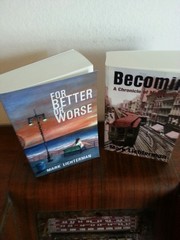
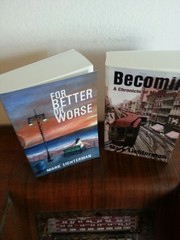



But I can empathize with your struggle. Partly because I have read, through your serialization, three of your books. Your first book, The Climbing Boy, is by far, your best. And I'm sorry that it took so long, 24 years, to get it published. And yes, I am not lying when I say that it is very, very good and harkens back to the writing of Charles Dickens in the 19th century.
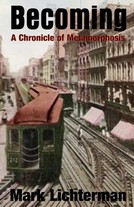
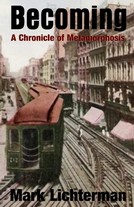
But Becoming is also a classic, a semi-biographical fiction of growing up Jewish in Chicago during World War II and beyond. The version that I read, still contains errors that any good editor could easily remove, but the passion and the detail of life in those times is what matters, and the honesty of the writer, you, shows through in practically every line.
I'm sure there are those who have flattered you with platitudes and behind your back criticized your use of parallel stories of friends and relatives in your work. Ignore those jealous fools for not writing their own books! And if you ever are criticized behind your back or directly by sacrilegious and hypocritical fools for writing about sex, ignore them. They are the first to read sexual material, partly in their mixup minds abhorring what they like--fools!
Do not lament not being famous. There are many great authors out there who are lost in time. But your books are clearly on the Internet where they can be viewed by anyone at any time. And, although you are aging and may not see it, both of those books may make it to movies at some point in time. They are legacy that only authors have. Much more than those who have not struggled with writing and writing well to get their thoughts down on the electronic script.
Ron
Yes, things get re-written, like love and passion, like love and hate, like the differences between siblings, like children get adopted. It's part of life and reality, but that DOES NOT MEAN THE WORK IS NOT OF THE AUTHOR'S ORIGINAL IDEA. A writer writes only in his/her OWN STYLE from his/her own thoughts, and THAT IS ORIGINAL!!!
YES, a writer can write and re-write life and realities many times over, and that DOES NOT CONTRIBUTE TO REPEATING OTHERS. In a love story people fall in love, have love affairs, and yes it has also been written by other authors many times over. But what a writer writes is from his/her own ideas and words. THAT IS THE DIFFERENCE BETWEEN THE LIFE EXPERIENCE AND THE STORIES. Readers with similar life experience can appreciate what they've read and appreciate the author's words because they feel connected. Stories may have similarities, but how a writer writes and delivers to his/her readers is the difference in the stories.
A poet writes of life's experience, like some others would have the same experience in their lives, and it is NOT a repeat of others work. It only mean that's a reality, part of life. But how a poet writes his/her own words and delivers to the readers is the key to whether or not the readers can feel the connection. How the poem has been dilvered will contribute to how successful the poem can become.
We must not be jaded in our thoughts when commenting on others. EACH PIECE OF WORK is valuable to the author because it is his/her OWN PIECE OF WORK.
This is my opinion. But then again, the guy who hates me isn't going to agree with me. He's too jaded in his thoughts for his own good.
Sandie