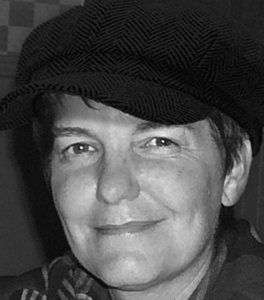
After an adventurous and unattributable career in security and intelligence, Yael Shahar now
divides her time between researching trends in terrorism and asymmetric conflict and learning
Talmud—often with the dubious assistance of her one-eyed cat.
She is an entertaining and sought-after public speaker, and lectures both in Israel and abroad.
Background
Information
Most of my writing has been purely in self-defense. Some was necessitated by the needs of survival--to communicate with others in hopes of finding some escape from the isolation of being alive. Didn't work out so well, but I tried.
Other bits of writing concerned putting food on the table. This mostly involves studying something until I know--or think I know--what makes it tick, and then using words to help others reach the same understanding without having to do the same research. This is called "academic writing", aka, Word Processor-aided Prostitution.
But the most important writing of all was done under the influence of a soul in distress. There are things that need to be told in order to reach anything approaching peace. There is no word for this kind of writing. It spills out onto the keyboard in a messy effluence of words. It is the type of thing that Heinlein famously suggested that one do only in private, "and wash your hands afterwards". Well, so perhaps there is a word for this kind of writing after all.... The thing is, it has to be done. Nothing was ever said about it needing to actually be read!
So influences... Where to start? Probably the most important influences are those that we aren't even aware of. And so I take a peek at my bookshelf. There is everything from Spinoza and Einstein to Bertrand Russell and Ernst Mach. But these are influences on thought, not writing. Or are they?
Well, perhaps we should look on a different shelf. The Talmud, the Rambam, Avraham Yehoshua Heschel, Rav Avraham Yitzhak HaKohen Kook.... Yes, that's a bit closer to the kind of influence we're after here--the power of words to mold thought and action. Of these, I would have to say that it's Heschel whose writing has left the clearest footprints on my own writing.
But now we go further afield. On the next shelf we find J.R.R. Tolkien, Thomas Wolfe, Peter Beagle, David Brin... Ah! Too many to mention.
What do they all have in common? They are all world-builders and not merely world-describers. They see a subjective element in reality and that informs their writing. They understand that we are partners in determining how the world "really is" at any given moment. That is not to say that reality is subjective and individually-determined; but only that it is a relationship between Human and Divine. When I read the works of these authors, I'm not just a voyeur observing their interaction with the world--I'm drawn into the dialogue. I become a participant. I become a co-creator.



 Share
Share Save
Save [
[