Part Two – Journey West
“What is a man,
Without the beasts?
When all the beasts are gone,
Man will die from loneliness of spirit,
For whatever happens to the beast,
Will also happen to the man.”
Chief Seattle
Music: All Is Gone
Once, so very, very long ago now
The Wapiti roamed this entire land
From down in Mexico up to Alberta
Then came, the advancing white man
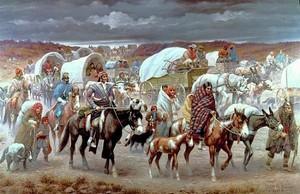
As North American pioneers moved west
They began hunting all these Wapitis down
Their eastern herds, are all now sadly gone
Today, only out west can a Wapiti be found
I have seen these Wapitis, up in the Rockies
I’ve marveled at them down in New Mexico
I always look for them when I’m out wanderin
Sighting one, or an entire herd, still thrills me so
On this trip, I was looking for them, around Wind Cave
There are still some Wapitis in and around the Black Hills
I sincerely hope future generations will still get to see them
Sighting a Wapiti, while wandering, always gives me a thrill
At one time, Elk were the most widely distributed members of the deer family on the North American continent. They were found all the way from Mexico up through Canada, and from the Atlantic coast to the Pacific.
But as American pioneers moved ever westward, and cities and towns ever expanded, human hunting took an enormous toll on them. Most of these magnificent elk quickly began to disappear, until only remnants of them remained in the Rocky Mountains, parts of the Pacific Northwest, and in Canada.
The Eastern elk herds, which historically roamed the Black Hills, are today very sadly extinct. But in 1914, some Rocky Mountain elk from Wyoming were re-introduced into the area around the Black Hills, where some of them still exist today.
The name ‘elk’ was given to this second largest member of the deer family by early North American explorers because they resembled the elk of Europe. But because the American elk is not very closely related to the European elk, the term ‘Wapiti’ is still often used for them. This name is derived from the Native American word ‘waapiti,’ meaning ‘white rump.’
And, like the few remaining North American wild bison, which once roamed our entire continent in vast numbers as well, I believe that we must help to preserve these magnificent creatures for future generations to come.
©2009, Mr. Ed


 Share
Share Print
Print Save
Save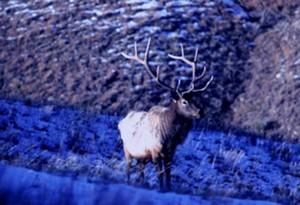














fortune of seeing herds of them in Rocky Mt. National.
The quote by Chief Seattle is so true, I believe.
Be always safe,
Karen
Georg
Blessings! Jasmin Horst
Fee
(((HUGS))) and love, Karla.
The only Elk left may be the Burleson Elks ... only in name.
(((HUGS))) and much love, your friend in Tx., Karen Lynn. :(
Love the music!