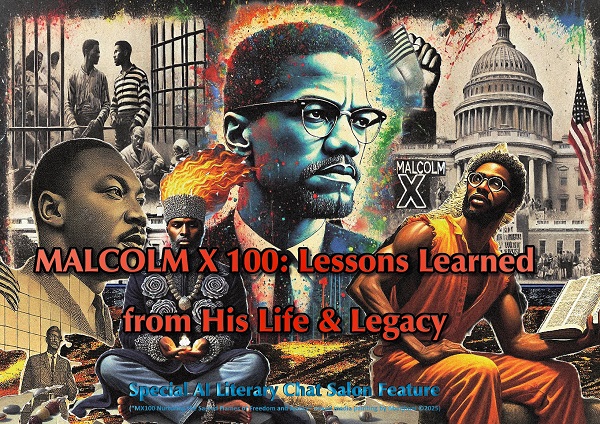
Human rights icon Malcolm X was often more vilified than honored as he rose to equal heights of fame and infamy during the 1950s and 1960s. For those drawing on wisdom and inspiration from the life example set by him, his distinctly American story makes observations of the 2025 centennial of his birth truly ironic. For a deeper dive into what it all means, please check out Malcolm X 100: Lessons Learned from His Life and Legacy at the AI Literary Chat Salon:
https://www.author-poet-aberjhani.info/ai-literary-chat/malcolm-x-100-lessons-learned-from-his-life-and-legacy
Aberjhani
(“MX100 Nurturing the Sacred Flames of Freedom and Justice” mixed media painting by Aberjhani ©2025)
RELATED ITEMS:
Democratic Dilemmas and Divine Inspiration
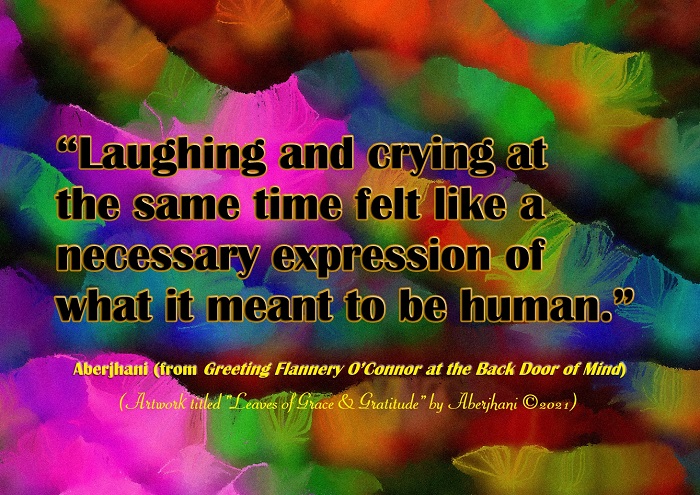
Greeting Flannery O‘Connor at the Back Door of My Mind
The American Poet Who Went Home Again















I never had any ill feelings towards Malcolm X, perhaps because I read what another great writer, Alex Haley, wrote of him in Playboy and read the Playboy interview of him. On the West Coast, I admired the Black Panthers for their also strong stance when it came for standing up for black people. I was fortunately able to bring Alex Haley to Texas Southern University for a fundraiser in 1982. Where he enthralled the audience with his description of how important it is for the underprivileged to get an education and how predominantly black colleges are able to provide that need for learning.
Recently, I’ve been watching The Godfather of Harlem. While fictionalized, the story does portray Malcolm X in a very good light and ends with his tragic death over rivalry among the Muslims seeking power rather than drawing together for a greater cause. Something we sorely need today.
Ron