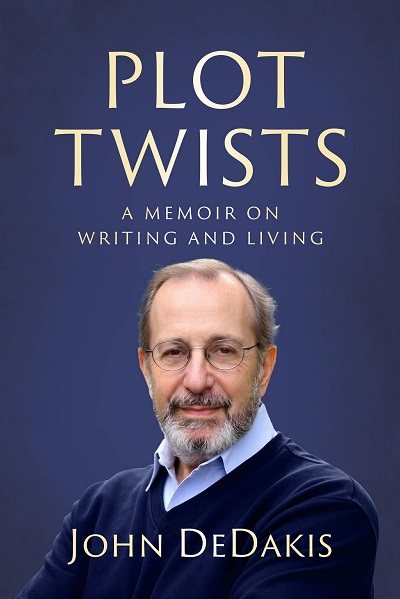
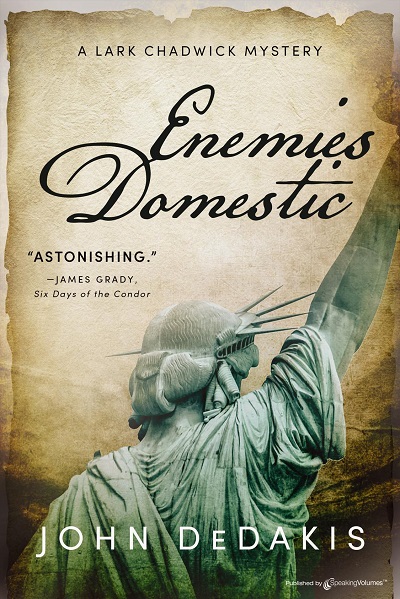
Blogs by John DeDakis
Beating Writer's Block
10/27/2009 8:15:32 PM
Some Suggestions
You know the feeling:
You’re on a deadline. You don’t have much time to craft the perfect story.
You sit and stare at a blank computer screen while it stares back at the blank expression on your face. With each tic of the clock, your blood pressure ratchets up a notch. Panic grasps you by the throat.
Ever been there? Of course you have.
During my 21 years at CNN, I’ve worked with some of the best writers in television news. I marvel at how they repeatedly – and rapidly – transform blank screens into solid, readable copy. Yet every now and then, someone gets stuck and needs a little help.
Whether your challenge is to write a news story, a novel, a term paper or an e-mail, here are some suggestions on how to beat writer’s block:
1. RELAX! - Nothing paralyzes more than trying to be perfect. The writers I know always aspire to do their best and that means nothing less than perfect. But it’s an elusive goal, so, rule number one: Relax. Take the pressure off yourself. It doesn’t have to be perfect – at least not the first time.
2. What Are You Trying to Say? - When a writer comes to me with that familiar blank stare, it’s usually accompanied by the statement, “I’m having trouble getting started.” It’s at times like these that I simply ask, “What are you trying to say?” Amazingly, when detached from the keyboard, the writer usually has no trouble telling me in his or her own words what the story is about. “Okay,” I’ll respond, “now go and write that.” Once the mental logjam is broken, the words flow through their fingers.
3. Listen to Your Head – Ah….but exactly what words? And in what order? The answers are already in your head. Listen to that voice inside you. Or, if you’re one of those whose head has many voices clamoring for attention, zero in on the voice you hear the clearest, then write down what it’s saying. Once you’ve written the first sentence, the others will follow logically as the momentum builds.
4. Take a Hike – Bob Slosser and Ken Gilliam are two of the best writers I ever worked with (may they rest in peace). Ken was a CNN writer who loved to craft the perfect sentence. He agonized as he searched for just the right words to turn an original phrase. He told me what worked best for him was first to think about the story. That was usually best done while taking a walk to the break room, the coffee urn, or the bathroom. When he returned to his computer, he’d make the keys clatter a bit, then he’d take another hike while his copy simmered. Finally, he’d return to take a fresh look at what he’d written, then buff, polish, tweak and revise before he was satisfied – or the clock ran out. Bob Slosser, a former New York Times editor and author of several nonfiction books, had an approach to writer’s block that was similar to Ken’s. Bob was a pacer. He once told me he wore out the carpet in his den as he walked back and forth in his quest to find the right words. Bob said each of his books “went through the typewriter” 25 times. That’s a lot of pacing. But you see, ruminating is simply another way of writing.
5. Write something. ANYthing! – Ruminating, thinking, and pacing are fine, but there comes a time when you must take action. So, just do it. You can always loop back and make it better.
These are just a few suggestions. The list is not meant to be exhaustive. What works for you? Pass it along. I’m sure we could all benefit from it.
My thanks to those of you who tell me you appreciate these little notes on writing. Is there a topic you’d like me to tackle? Let me know. Also….if you have a manuscript that needs the touch of a professional editor, put my experience to work for you.
Thanks!
John DeDakis is a Senior Copy Editor on CNN’s “The Situation Room with Wolf Blitzer” and the author of the mystery-suspense novel “Fast Track.” Visit his Web site at www.johndedakis.com
Post a Comment
More Blogs by John DeDakis
• I'm a Slow Learner - Friday, July 17, 2026
• Actual Story vs. Backstory - Friday, December 6, 2024
• How to Overcome the Power of Procrastination - Friday, June 21, 2024
• What's in a Name? - Friday, March 22, 2024
• Meandering - Saturday, January 20, 2024
• Write Where You've Been - Monday, July 31, 2023
• Stop Being a Scaredy-cat - Friday, June 2, 2023
• 2-Minute Writing Tidbit - Monday, March 30, 2020
• Ode to a Mentor....Or Letter from the Grave - Thursday, September 23, 2010
• You Should Write a Book - Wednesday, April 21, 2010
• Ever Feel Inadequate? - Tuesday, April 20, 2010
• Change is Good - Tuesday, February 23, 2010
• Overcoming the Fear of Rejection - Tuesday, November 3, 2009
• Beating Writer's Block - Tuesday, October 27, 2009
• What a Manuscript Editor Does (and Doesn't) Do - Monday, September 7, 2009
• Confessions of a Cross-gender Writer - Saturday, July 4, 2009
• 5 Ways to Stay Organized While Writing a Novel - Tuesday, May 19, 2009
• Writing for the Ear; Writing for the Eye - Sunday, May 17, 2009
• Plan a Little; Write a Little - Friday, May 1, 2009
• Building a Novel - Friday, April 10, 2009
• Writing a Screenplay - Tuesday, February 17, 2009
• VICTORY! - Wednesday, January 7, 2009
• A Creative Setback...and Opportunity - Wednesday, May 14, 2008
• Heading to the Inca Trail - Saturday, September 15, 2007
• Solving the Time Problem - Thursday, April 5, 2007
• Simmer Mode - Saturday, March 31, 2007
• The Art of Flitting - Friday, February 2, 2007
• Brooding - Monday, January 29, 2007
• Scene Building - Sunday, January 14, 2007
• Getting Stuff Done - Tuesday, January 9, 2007
• Connecting - Sunday, December 3, 2006
• Making Revisions - Friday, December 1, 2006
• In Search of Balance - Sunday, November 12, 2006
• The (sort of) Daily Muse - Thursday, November 9, 2006
|