AuthorsDen.com   Join | Login    
Where Authors and Readers come together!

SIGNED BOOKS    AUTHORS    BOOKS    SAMPLE CHAPTERS    AUDIOBOOKS    eBOOKS    STORIES    ARTICLES    POETRY    BLOGS    NEWS    VIDEOS    SUCCESS    TESTIMONIALS

Featured Authors:  Frank Whyte, iShannon MacLeod, iErin Kelly-Moen, iBetty Jo Tucker, iAntoinette Kopperfield, iElla Rydzewski, i Aberjhani, iChristine Boyce, iShirley Woods, iDavid Arthur Walters, i

  Home > History > Poetry        Popular: Books, Stories, Articles, Poetry        Authors: A B C D E F G H I J K L M N O P Q R S T U V W X Y Z     

Carmen Ruggero

 Follow Me  

· Contact Me
· Books
· Articles
· Poetry
· News
· Stories
· Blog
· 113 Titles
· 1,812 Reviews
· Save to My Library
· Share with Friends!
·
Member Since: Nov, 2002

Carmen Ruggero, click here to update your pages on AuthorsDen.


Ceibo
by Carmen Ruggero → (All Poetry by Carmen Ruggero)
   Not rated by the Author.
Share   Print  Save   Follow   Share on Facebook


Poem Artwork

They were peaceful. They were called the Guaraní.
The Paraná Delta of Argentina – their native home.
It was theirs, theirs to rule, and theirs alone.
They lived from the fruit of harvest;
they were peaceful – the natives called Guaraní.
Amongst them lived a princess – her name was Anahí.
Strong bronzed limbs, piercing eyes, shiny as twilight,
courageous young woman, who in name only survived,
on a night when the river was silent – not a sound, not a one
as the Spanish fleet lurked in phantom ships
with bows pointed to evil ends, and
in their sinister mission, the burglars crept
to shore that night without moon, or stars
and in the name of Spain and its lesser god
they would rape the women – make men their slaves.
Without warning, their savage blast fell
upon the peaceful and unsuspecting, Guaraní
when from the black they appeared flaring
crosses, and raising torches and swards.
They bellowed orders to surrender; the Guaraní fought.
Anahí leaped to her tribe’s defense – strong,
determined, she fought as well as any man would.
From the shadows deep in the brush, she kept vigil
and waited – eyes on the predators, nostrils flaring
muscles tensing and she jumped!
Legs straddled his waist, taut arms – garrote,
she buried her knife in the Spaniard’s throat.
Torches flaring, weapons drawn, crosses waving,
they pursued, she fled, they called, she leapt
into shadows, lay low in the brush – hushhh….
Not a breath was heard, not a sound.
Sinister eyes abound and searching,
hers darting – alert, panting, sweating… she moved
and they found her!
She fought. She was strong – they were many.
She was captured and condemned to die –
Die Indian die by burning – die!
She endured in silence – no tears – no moans,
as she was set aflame – on a night such as that,
one without moon or stars – she burned and
as heroes and legends do, she bled upon
a page of history some have forgotten, somehow.

Carmen Ruggero©2005&2006


The above story is fiction. The native tribe Guaraní was real,
and the Spanish attacks on our Native population,
a historical fact.
Men were enslaved and forced into labor.
Women were captured and raped, the result of
which gave birth to the Argentine Mestizo – half native,
half white.  The belief was that the combination of Native
physical strength with the white, taller structure, would
create a stronger working class. These children were
later abandoned by the Spaniards.
The native population of Argentina is non existent.

The story of Anahí was a legend and according to it,
on the morning following her agonizing death, a tree
p
ossessing her qualities grew on the very spot she died.
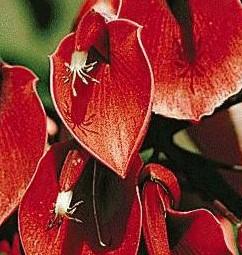
It has hardy brown limbs, a soft interior, and red blooms.
Its Spanish name is:  Ceibo, or Seibo – the Coral tree.

 On the 24th day of November of 1942, the Ceibo
was declared the national flower of Argentina. Sources on
this information vary. Some indicate it was in December of
1942. 


Author footnote: Perhaps this needs clarification: As I
said above, the bloodshed was real. I fictionalized the
story in my poem because I mixed it with the legend.
Coral trees grow wild in that area. Their flower is deep
red in color. The coral flower was made our national
flower because of its color and the spot in which it grew. Naming it our national flower was to honor our Native population. The legend came out of fact, not the
other way around. ~Carmen Ruggero


Want to review or comment on this poem?


Need a FREE Reader Membership?


 Reviews of "Ceibo"
Reviewed by Georg Mateos
Reviewed on April 20, 2007
La flor de Ceibo, color de sangre que corre por mis venas, como los rios que corren por mi tierra, para apagar la sed de la historia.
An extraordinary biographical poem of forgotten people, much more civilized that the ones bringing "civilization"
Georg

Reviewed by Regis Auffray
Reviewed on December 8, 2006
This is fascinating, Carmen. Thank you for sharing. I appreciate this. Love and peace,

Regis

Reviewed by Franz Kessler
Reviewed on January 15, 2006
True historical or historical fiction, it sheds light on events that did happen, such as in the war against Jesuite Paraguay, where all Guarani men were killed. Guarani women are absolutely outstanding by spiritual elegance and beauty. (I travelled through Paraguay in 1979, still under the terrible Stroessner).

All the best, Franz

Reviewed by C. McGovern-Bowen
Reviewed on January 10, 2006
My, Carmen, how you enlighten so effortlessly! A beautifully penned work. Love the Ceibo!
Peace and Blessings,
Carolyn

Reviewed by Elizabeth Taylor (Reader)
Reviewed on January 9, 2006
That is so sad, but a wonderful story. There is no native population? Now that is sad. It is even more important to keep the stories and legends alive through writing. Good work!


Reviewed by Kate Burnside
Reviewed on January 9, 2006
A powerful and poignant poeticisation of a very painful event, Carmen. As always, you are a crafted and eloquent story-weaver and teller. You must have a strong background in oral tradition. Beautiful as it is bloody. TY Kate xx

Reviewed by Helga Ross
Reviewed on January 8, 2006
Something different from you; fascinating.

I enjoy the form and that it artfully informs.


Reviewed by Phyllis Jean Green
Reviewed on January 8, 2006
What a rich imagination you have!! How well you translate it into
words that paint pictures!! How wonderful that the pictures, even
though they tell 'fictional' tales, lead your readers to essential truths and historical treasures!! Broaden cultural vistas!!! 'Overuse of exclamation marks'--?
So be it. {!!!!!! :)} <3 'Pea' <3 ~~ PS: Luv the sek-see
flars you chose by way of illustration. . .t o o. . .

Reviewed by Peter Paton
Reviewed on January 8, 2006
You have crafted a superb and compelling story based on fact, which had me rivetted throughout Carmen
Thanks for explaining the legend behind this spell binding tale, and the origins of the striking coral flower as the emblem of Argentena !
There are many places in the world where legend and myth based on historical facts have given rise to national emblems !
My own native Scotland is one in question, where the National Emblem the thistle, is reputedly connected to the invading barefoot Vikings, stepping on the sharp edges of the thistle in the dark, and in their disarray, giving away their presence to the native Scottish Picts !
The picture of the coral flower is both striking and emblematic !
Peter

Reviewed by Tinka Boukes
Reviewed on January 8, 2006
Most powerful story-poem ...I truly enjoyed reading...had me on the edge all the time!!

Love Tinka

Reviewed by J M (Reader)
Reviewed on January 8, 2006
I love the captions and this is creative I believed it to be true you did such an excellent job just beautiful work Poet!

Reviewed by jude forese
Reviewed on January 8, 2006
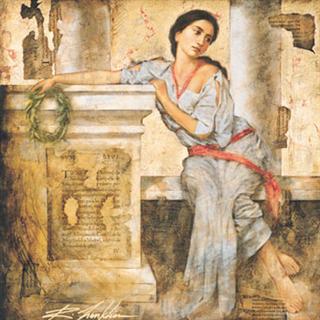
captivating scenario ... effortlessly visualized through exceptionally crafted images ...

Reviewed by Jerry Bolton (Reader)
Reviewed on January 8, 2006
Strange that they would name a flower from a fictional tale as the national flower. I am not trying to dilute your poem, which was good, but still . . . to bestow that honor on lies is very strange.

Reviewed by Vesna Perkovic (Reader)
Reviewed on January 8, 2006
What a glorious story..so well written..you truly are talented Carmen..and when you refer in any way to Argentina I can sense the love you have of your native country..indeed it is a profoundly beautiful land.
Splendid piece..

Vesna

Reviewed by E T Waldron
Reviewed on January 7, 2006
Thank you for this marvelous story/prose Carmen!
I saw a special once on the Guarani tribe on our pbs channel.
It was very intersting.I thought at first your story was true
until you said not. But the tribe is real as you say.
Very creative work , exciting,intersting, and enjoyable!

Eileen

Reviewed by Lori Moore
Reviewed on January 7, 2006
Well told. It is hard to find any place where indigenous people were not treated as less than human.


New Poetry by Carmen Ruggero
Popular Poetry (History)
  1.  Legacy
  2.  Diamonds in the Rust
  3.  together they persevered...
  4.  Rani Durgavati -The warrior queen
  5.  White Throne
  6.  He Built For Her A Tomb
  7.  Legend
  8.  A New and Beautiful World will Rise on
  9.  Napoleon's Nascent Love For Josephine
  10.  Betrayal
  11.  Obama's Finest Hour
  12.  Work
  13.  Guantanamo I am Poem Against the Coffe
  14.  TALL TALES OF TALL SHIPS
  15.  La Belle Rabelle
  16.  Tall Ships
  17.  Rockets' Red Glare
  18.  theirs
  19.  A Walk Back Through Time
  20.  Warrior
Free Book Review Program
Select a book to read and review today!

Free Download - The Belgian Curtain - Europe after Communism by Sam Vaknin

The European Union, NATO, the euro, and central and eastern Europe after the fall of communism.  
Member BookAds

Tuberculosis: The Greatest Story Never Told by Frank Ryan

The heroic story of how a small group of people, few of them TB experts, found the cure for the greatest killer in human history. But the battle needed to be extended to all sufferers. Why have we failed to take the miracle to the developing world?  
Member BookAds

An Existential and Numerical Approach to American History by Dr. Patrick ODougherty

www.irishcatholicpublishing.com. www.dodoughert9.wix.com/Irish-publishing By Dr. Patrick A ODougherty  
Member BookAds