The Yellow Bellies of Lincolnshire
There is a spring mistiness in the air,
A yellow mellowness everywhere...
A crowd of daffodils
Dancing on the hills
Tufts of wild primroses
In pale yellow cascading
From high to low
Stars of selandine sparkling
In woodland glade
Dandelions glowing in
Ditches and dips
Flowing carpets
Of cowslips and oxlips
The soft buttery yellow
Of a buttercup meadow
And the bold yellow gold
Of marsh marigold
Yellow yellow everywhere
Everywhere I behold
But none compare
To the full on glare
Of oil seed rape
Of which the eye cannot escape
Bloated and consumed with this yellow bloom
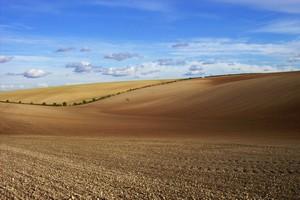
Stretching out as far as the eye can see
A sea of yellow, as yellow as yellow can be
Skirting every lane and alley
Draping every hill and valley
Swathing every ripple and fold
Swelling every rolling belly
Of the Lincolnshire Wolds
Its seeds have taken root
In amongst the fruit trees
In a church orchard of crab apple trees
For every year there reappears
A towering mass of yellow spears
Grabbing and pinching space
From Queen Anne's lace
The yellow fingers of rape wraparound
Waste ground lingering around
Pockets of poppies and where
Other wildflowers are usually found
Led along the water's edge
Of the river bank ledge
Beds of rape have spread
And now outflank the sedge
Every country road hedge overflows
And glows with the yellow rows
Of rapeseed wildly sowed
Fields of wheat, corn and maize
Embroidered and laced into a yellow maze
Like a patchwork bedspread
Stitched with a single yellow thread
And even where cows mingle, graze
And traipse the seeds of rape disperse
And burst into a towering blaze
Like a pernicious weed or wildflower
There is no doubt it grows about
With such rapacious speed
And tenacious power
Its tentacles spreading like wildfire
Breeding, bleeding, feeding
Into every scene a yellow gleam
Like a trip into a mono-yellow surreal dream
For crisps,
Cakes,
Curries
Pastries,
Biscuits,
Bio fuel,
Slow to boil, frying oil
Cream and margarine
Jane Air 2016 copyright
Early version of this poem has been published by Forward Poetry in 2014.




 Share
Share Print
Print Save
Save Follow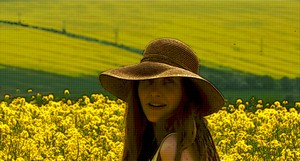





What I particularly admire is the way the poem moves between the intimate and the expansive. It begins with the delicate signs of spring and the familiar beauty of flowers, but the repeated presence of yellow steadily grows into something almost overwhelming. Yellow becomes more than a colour. It becomes an atmosphere, a landscape, and eventually almost a character in its own right. The progression from daffodils, primroses and dandelions to the vast fields of oilseed rape gives the poem an impressive sense of scale.
There is also a fascinating tension between beauty and excess. The countryside is initially presented with warmth and wonder, yet the poem gradually makes us aware of how completely this colour has taken over the landscape. Words associated with growth, spreading, consuming and encroaching give the yellow landscape an almost unstoppable energy. That ambiguity makes the poem much more interesting than a straightforward pastoral description. Nature here is beautiful, but it is also powerful, persistent and occasionally unsettling.
The imagery is one of the poem’s greatest strengths. The abundance of flowers, fields, hedges, trees, waterways and countryside creates a vivid visual experience, while the recurring yellow imagery ties these separate elements together. I also enjoyed the way the poem eventually brings the reader back from the enormous landscape to ordinary human life through food and everyday references. That ending gives the colour another dimension, connecting the natural landscape with agriculture, industry and the things that ultimately enter our daily lives.
Structurally, the repetition works particularly well. The recurring references to yellow create a kind of rhythmic accumulation, almost mimicking the way the colour itself spreads across Lincolnshire. Rather than simply telling us that the countryside is yellow, the poem makes us experience the gradual saturation of the landscape. It feels almost cinematic in places, as though the camera keeps pulling further back until an entire county becomes part of the image.
What makes the poem memorable for me is that it manages to hold two ideas together at once: the sheer beauty of the natural world and the uneasy realization that beauty can also become overwhelming. That gives the poem an understated depth. Beneath its playful celebration of yellow is a thoughtful observation about perception, abundance and our relationship with the landscapes around us.
There is something wonderfully distinctive about the poem’s voice too. It does not feel overly concerned with being conventionally “pretty.” Instead, it is curious, playful, visual and occasionally surreal. The result is a poem that invites the reader to look at an ordinary countryside scene differently. After reading it, yellow no longer feels like merely a colour; it feels like an entire experience.
For me, that is the mark of an effective poem: it changes the way you notice something that you thought you already understood. “The Yellow Bellies of Lincolnshire” does exactly that. It turns a landscape into a palette, a palette into an atmosphere, and an atmosphere into a memorable poetic world. A distinctive and imaginative piece with much more beneath its colourful surface than one might expect at first glance.