The hourglass has always held some special fascination,
Drawing us seductively inside with its alluring temptation.
The history books record a time without a rigid measure,
Time simply flowed freely, like a river gathering treasure.
The hourglass could confine time within its cupped hands,
To keep track of the time thru the motion of flowing sands.
The sand timer a simple device to capture time in its embrace,
Two glass bulbs vertically connected reflecting the same face.
The upper bulb contains all the sands of the universal ocean,
Gathered together in time’s continuum as a measured potion.
The lower bulb consists of the receptacle that remains empty,
Awaiting time’s passage as the sands fill the bulb with plenty.
As the sands pass through the isthmus, one hears a faint breeze;
The isthmus but symbol of separation between two separate seas.
Whether fresh or salt water, whether the temporal or the eternal,
The isthmus marks separation point of the natural and supernatural.
As the sands make the descent between bulbs, a drama lies in store,
The present slips away and the past gathers on some distant shore.
Existence itself turns over the hourglass in a manner to commend,
To understand the universe and its eternal cycle of origin and end.
If not the coarse or smoothness of the grain or the size of the neck,
The bulb size itself betrays a dimension to contain every single speck.
As a symbol of time itself, having now given up its role as time-keeper,
We know that existence is fleeting, the sands of time the grim reaper.
Lo and behold the trickling sands, they drift downward as they must,
A poignant symbol of our temporality until we finally return to dust.
The hourglass mimics laws of gravity, the sands always fall with surety,
In keeping with the universal order in which death is but a certainty.
As the sands trickle downward, so does time drag its little feet forward,
When the final grain escapes, then the hand of God lifts the glass upward.
To resume the cycle, unleashing the sands of time . . .
It is amazing to think of the precision of the hourglass. And for the patience of the hourglass keeper who would wait until the last second when the last grain of sand fell through that "isthmus" at just the right time to be turned over to repeat the process for one more exact hour again.
to the well-known expression which says that men like to look at three things: water, fire and other men's working, I would add 'reading John's poem entitled The Sands of Time. I love it from its first line. Cheers, alex
You are up to you normal exquisite poetry, John. I can certainty understand the slow dripping of the "Sands of Time." Sorta wish the would drip even slower though. Eh . . . It is what it is.
Very creative description of time passing. I loved the gentle rhythm of the poem. Tonight as I ponder where I've been, where I am, and where I'm going it touched me in unexpected ways. Thank you.
Still Living on my Feet is the follow up to Tichaona Chinyelu’s first book, In the Whirlwind, which was rooted in a sense of hard-hitting revolutionary black love. However, in this sophomore effort, Tichaona brings the revolutionary essence from deep








 Share
Share Print
Print Save
Save Follow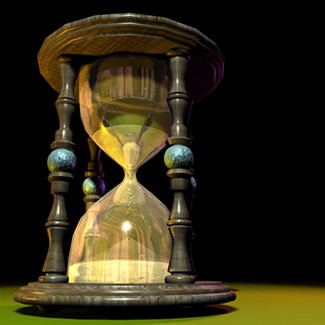







Ron