A Three-Month Walk:
The Haven, the End
By
Danae Wilkin
It starts when I exit the heavy door separating the ARS office and the sky.
So many times have I walked on the concrete path that ends abruptly at the Maranatha peanut butter driveway. Everyday, I smell the magnificent odor of fluffy eggs and biscuits in the morning and peanut brittle in the afternoon.
I amble on the street headed south, where there are clogs of barely dried mud in places on the blacktop to avoid. On my left I see guys constantly smoking and hanging out in front of an unlabeled “business”. I suspect that they don’t sell anything; they just wanted a hangout-building suite.
Finally the pavement reemerges next to the Yerba Prima factory.
I tread the grey ground, seeing tiny five pointed leaves of an Acer tree above: the wonders at my feet. They are red on the top, and the color of a poinsettia on the underside—a pink shade.
I reach the manhole cover where I turn around on my second lap. For the full walk around the block takes only 12 minutes, so I return to that circle of heavy steel and turn back toward the office to seize my full 15 minute break.
As I walk through the red and pink, I notice the stick, stick, stickle, stick under my feet rounding the first corner to the east.
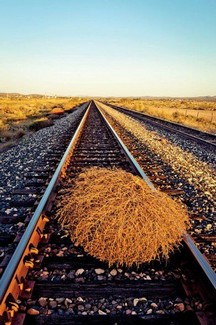
Onward I go as the whitish path is new, but the shrubberies and landscaping have been overtaken by weeds such as the stench of sickly sweet honeysuckle hanging in air. Little daisy-colored flowers, like ornaments on twine, weave through a tumbleweed-like see-through bush.
Sharp thorns of a native species of vine stretch angrily, like skeleton arms with hands grasping toward the north side of the sidewalk and into the empty field freshly watered by the firmament.
The grassland is Zoned E-1, so says the sign. It’s 1.3 acres. It looks like a swampland that no one would want to build on unless they made a foundation ten feet high.
Plowing forward I see naturally growing California poppies to my left. Their little dusty green parsley-like supports bear up the yellow-orange blouses flying up in the breeze.
On my right I see a distant business in progress. I hear hammers everyday as they make their structure.
More white, freshly poured walkway welcomes me as I continue eastward. To my left I see a warehouse where a man wheels out a pallet and with the help of the driver, loads it on the UPS freight truck. Bounding the boxes with industrial cling wrap, I can still see the enterprise is called “The Modern Fan Company”.
I turn a second corner, now there is no more pedestrian assistance. I slow my gait at the edge of the asphalt, whose crust has crumbled off into the ditch like the bottom of a bag of Oreos. I pass busted up and fading mailboxes.
Now on my right is the I-5 freeway of four lanes, two each way, and across that is a brewery whose hops are wafted toward me, a little stinky, but I’m a beer addict; so to me it smells as good as coffee.
My left vaunts two bleached dead white trees without bark or vegetation. It looks like a giant crawled into the earth and got stuck, legs up.
There is now a railing on the right curve presumably to prevent drivers from going over the hill and down onto the “low-way”.
A little later, I come across an abandoned barbecue grill on my right. It’s on its side and its hood is about ten feet apart from its family’s new home.
As I turn left again at the third corner, I hear doleful singing blackberry arms swapping against a barbed-wired fence as if to punish its existence.
I can now see in the backside of the meadow another grill tossed on its side and wonder, “Why dump them here?”
Before long, I pass the dumpsters to the left, with one being cardboard-only and the other for garbage. I also pass some large juniper bushes that smell disgusting as gin to me. On the right, I see two gray-brown deciduous large trees completely barren, looking like the vulture crash pad. A few steps and I return to civilization. On my left are businesses and right are parked cars.
Rounding the last corner, I see ARS again, a welcome sight, but I have to go to the metal marker before turning back and arriving at home—my second home.
This is how I recharge: a walk-break from my beloved job.
But this third month to the day, I learned there wasn’t going to be a fourth month.
I was let go. A place that seemed like forever became a detached, vivid memory.
How could I know there weren’t going to be any more days—any more walks?
Despite a period of crippling emotions, those three months brought me here—to a place of new beginnings after a long bout of despondency.
I finally said goodbye and let go too.
Nature nodded.
I felt love again.


 Share
Share Print
Print Save
Save Follow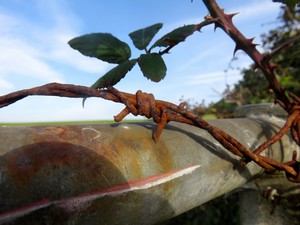








Regis