 The Nanticoke Indians in Delaware navigate a century of cultural preservation through pow wows, enduring war and societal changes.
“Many moccasins will make Millsboro the stamping grounds for Delaware’s first Nanticoke Indian pow wow,” reported the ‘News Journal’ on September 15, 1978. The newspaper got the ‘first’ part wrong by 56 years when considering the pow wow as a publicly presented event.
By the early 20th century, the Nanticoke Indians had spent centuries in the Indian River country of Sussex County, striving to preserve their identity–which included pow wows–against racial prejudice and overwhelming obstacles. Late 19th century Nanticoke Chief Wyniaco (William Russell Clark) concluded an outreach program to the greater community would be the best antidote to prejudice. He conducted 23 years of research before forming the Nanticoke Indian Association in 1921. The association targeted the safeguarding of Nanticoke history, folklore, and traditions.
The Nanticoke Association was the first to be formed in the Mid-Atlantic area since the Powhattan Confederacy disbanded in 1644. The Nanticokes, incidentally, had belonged to the earlier confederacy of Indian tribes.
Birth of the Nanticoke Association
Clark ascended as the Association’s first president. Chosen for his lineage, he was the son of Lydia H. Clark—Nau-Gwa-Okwal—the last of her tribe fluent in the Nanticoke language. (Two monuments at Riverdale commemorate this last Nanticoke “princess”; a small one, at her grave site, places her death on December 26, 1856, at “about 75 years,” while a larger monument, erected nearby by the Colonial Dames of Delaware, erroneously gives the year of her death as 1859.)
Chief Wyniaco’s close relationship with Dr. Frank C. Speck, an anthropologist from the University of Pennsylvania, aided in the restoration of Nanticoke customs and language. Together starting in 1922, they organized Thanksgiving Day pow wows, attracting tourists and indigenous guests alike for cultural exchanges and ceremonies.
Chief Wyniaco extended invitations beyond his community. He invited distinguished tribal leaders and speakers, including Chief Strong Wolf of the Ojibway Tribe and Princess Tantaquidgeon of the Mohican Tribe. This inclusive approach broadened the scope of cultural discussions and deepened the celebration’s impact.
Key rituals, like the ceremonial greeting dances led by Robert Wyniaco, Chief Wyniaco’s son, and the snake dance around the council fire, deepened the experience. Scholars from the University of Pennsylvania and the University of Delaware lent academic rigor to these events, thereby validating the Nanticoke’s heritage and customs to the outside world.
Amidst a history of geographic dispersal and dwindling representation, the pow wows served as more than mere gatherings. These gatherings marked a revival of indigenous practices and beliefs.
Chief Strong Wolf made a strong plea for the education of the Indians, lamenting the closure of the Carlisle school in Pennsylvania, and advocating for equal rights. The Association took these calls to action to heart, laying groundwork for future Thanksgiving Day pow wows and allowing the Nanticoke and their allies to keep the council fires burning.
Through these efforts, the Nanticoke not only reclaimed their own heritage but also offered a platform for the revival of indigenous cultures more broadly. Princess Nelson of the Penobscot Tribe captured this essence, stressing the need to sustain individuality and bring ancient customs back to life. Far from being mere social events, these pow wows set the stage for future generations to fully embrace their heritage.
Chief Wyniaco died in 1928 and was succeeded by his oldest son, Chief Sea Gull. Chief Little Owl (Charles Cullen Clark) was named head of the association in 1933 upon the death of his brother.
A Decade of Transition
By the 1930s, the annual Thanksgiving Day pow wow began to undergo subtle transformations. Traditionally held at Riverdale in Sussex County, the home of Chief Little Owl and his mother, Princess Sog-Wow, the event showcased classic dances and tribal ceremonies.
The fall 1937 pow wow did not take place. Instead, the Nanticoke Indian Association announced plans for a larger gathering. This expanded event would include other tribes and was scheduled for the following summer. Chief Little Owl had participated in the harvest festival of the Chickahominy tribe near Richmond in 1936, fueling the desire for a more expansive event.
The vision materialized in July 1938, shifting the annual event from a Thanksgiving Day focus. A three-day pow wow at Riverdale drew representatives from six tribes, including the Seminole, Cherokee, and Oneida, garnering thousands of spectators. Electric lights dangled from pine branches, infusing a modern touch into the ancient war dances. Chief Little Owl presided over the festivities, which included performances led by 18-year-old Emerson Waterman, known as “Young Red Eagle,” an Onondaga descendant. The crowd also heard war stories from Wild Wolf Wanna, a Seminole veteran of multiple wars, adding another layer to the complex tapestry of tribal history.
The 1939 pow wow was also held in the summer; the 2–3-day event was cut short by the rationing of gas, with war looming.
Speck continued his long-term involvement with the Nanticokes. Speck was still actively engaged in research and preservation work with the tribe in early 1941. His focus was not merely academic but also revivalist, as he reintroduced ancient languages, legends, and traditions that had been nearly forgotten by the community.
While the annual pow wows had gained momentum as a cultural cornerstone, the seismic shifts of World War II brought unforeseen challenges that dramatically altered the Nanticoke community and its traditions.
The attack on Pearl Harbor in December upended the Nanticoke Indians’ plans for future pow wows. As the war mobilized both troops and civilians, it redirected community resources and focus, disrupting traditional events.
The War Years and Their Impact
First, the war effort required human resources, which meant that men of eligible age, including those from indigenous communities, were drafted or volunteered for military service. The absence of these men had a profound effect on community activities and traditions, including the manpower needed to organize and participate in pow wows.
Second, the economic demands of the war led to rationing and redirected resources. Items such as fuel, textiles, and food were limited, affecting the feasibility of holding large gatherings like pow wows, which often involve elaborate costumes, communal meals, and travel.
Third, the sociopolitical climate during the war often emphasized unity and prioritized activities directly supporting the war effort. In this environment, cultural activities such as pow wows might have been viewed as less essential, even distracting from the national focus.
While the annual Thanksgiving pow wows ceased during the war years, the Nanticoke Indians maintained an active organization.
C. A. Weslager, an author and president of the Archaeological Society of Delaware, in 1943 joined the ranks of honorary Nanticoke members. During a weekend visit alongside Speck, Weslager engaged in talks about an upcoming textbook focused on early Indian life in Delaware.
The textbook, aimed for use at the Nanticoke Indian School—the only school of its kind in Delaware—was a collaborative effort with the Archaeological Society. Furthermore, the Association hoped to planned a new pow once the fighting ended, albeit one with limited attendance.
The 1943 plans never materialized. After the pow wows were discontinued, association members and their families continued to gather on the first Sunday of each October at Indian Mission Methodist Church, near Riverdale, for an all-day program featuring special homecoming services and a dinner, the latter served on the church lawn. Charles Cullen Clark–Chief Clark–or Little Owl–as the patriarch of the Indian Community, was ordinarily a conspicuous figure at these homecomings.
The Association’s Dormant Years
But as the years passed and older members died and the younger members’ interest turned elsewhere, the association became dormant. Chief Clark said that so many of his people had dispersed it was not worth the effort.
Although the association found itself dormant in the post-war years, the late 1970s would herald a revitalized commitment to community and culture, thanks in part to a new generation of leadership.
The death of Chief Charles Cullen Clark in 1971 marked a significant moment in the history of the Nanticoke Indian Association, signifying both a conclusion and a commencement. It was an end to a long stagnant period, during which the Association maintained a lower profile, focusing on community cohesion and local land ownership. Chief Clark’s understated approach to leadership reflected a period when the Nanticoke mostly avoided the national spotlight. His passing served as a catalyst, inspiring a renewed vigor within the organization, propelled by his son Kenneth Clark.
Kenneth Clark, unlike his father, recognized the importance of continuing to engage with external communities and policy makers to ensure the survival and prosperity of the Nanticoke. He became an active participant in conferences and other forms of advocacy, especially championing the rights and recognition of non-reservation tribes. His activism became a watershed moment, urging the Association to navigate the public eye skillfully, while serving as both guardians of their rich history and shapers of an emerging future.
Renaissance of Nanticoke Culture
The late 1970s were a critical time for the Nanticoke. In 1977, the Association participated in its first parade at Pot Nets during Memorial Day weekend, which saw members wearing costume replicas of native dress. This event signified an active step towards cultural preservation and was emblematic of the Association’s dual existence within the mainstream of American culture and the preservation of its native heritage. Around the same period, a $29,000 federal grant was allocated to the Association, benefiting members in numerous ways. The grant not only facilitated higher education for five tribal members but also financed a census of the local Indian population. This infusion of federal resources indicated a broader acknowledgment of the Nanticoke’s significance and set the stage for future endeavors.
Parallel to these structural advancements, grassroots activities flourished. Children and mothers from the Riverdale-Oak Orchard area gathered at the Nanticoke Indian School, where they took part in the preservation and repair of original native costumes. This collective activity symbolized a newly blossoming interest in retaining native customs, a trend mirrored across generations.
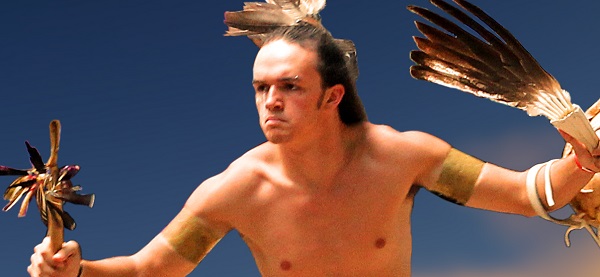
In 1978, the Association revived the Nanticoke Indian Pow Wow, like its early 20th century precursors a public event designed to offer an authentic experience of native customs. The Pow Wow featured traditional dances, drumming, and native crafts for sale, capturing the essence of the Nanticoke culture. The event also served an educational purpose, dispelling mainstream stereotypes by providing an authentic representation of native life. Donations collected during the event were directed toward the creation of a Nanticoke Museum, underlining the community’s commitment to educational and cultural preservation.
Navigating the New Millennium
The Nanticoke Indian Association emerged from a period of stagnation to experience a renaissance in the late 1970s that carried on well into the 21st century. The Association leveraged both internal and external opportunities to strengthen its communal bonds and cultural heritage. It successfully transitioned from an organization content with internal cohesion to one that once more actively engaged with the broader societal milieu.
|