 Colonial Delaware's Anglican Christmas blended English traditions with frontier life, featuring evergreen-decked churches, festive feasts, and social gatherings, shaping enduring holiday customs.
Colonial Delaware's Christmas traditions bear the unmistakable imprint of Anglicanism (the Church of England). However, this denomination never established the stronghold in Delaware that it enjoyed in neighboring Maryland and Virginia.
Anglican congregations in the United States faced a challenge after the American Revolution: how to continue their faith while breaking ties with the Church of England. In 1789, they formally organized the Episcopal Church, incorporating many Anglican practices into this new institution. The enduring influence of these traditions is evident in an 1880 article from The Morning News, which notes, "The elaborate observance of Christmas, together with other gracious early customs, still lingers in Delaware. It is more than likely that this reverence for the Yuletide is directly traceable to the early establishment of the Episcopal church in these parts."
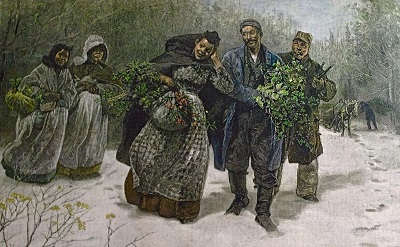
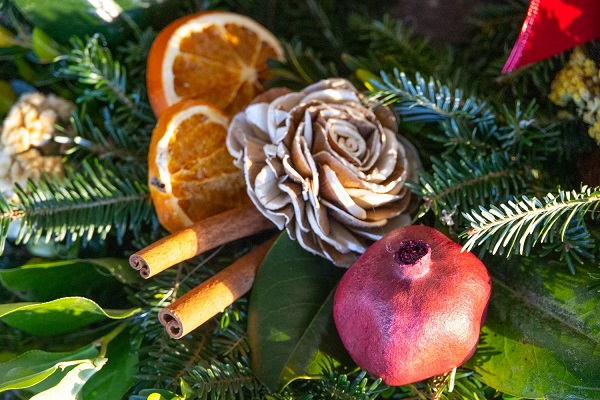
Anglican Christmas in Delaware featured the striking decoration of churches. The same 1880 article observes, "Probably in no other part of the country are the minute forms and ceremonies of the Church of England more jealously guarded, and no custom is more warmly clung to than that of dressing the church in evergreens." Adorning churches with greenery was not merely an aesthetic practice but carried deep symbolic meaning. Evergreen decorations symbolized eternal life and the return of spring, reflecting Christianity's themes of renewal through the birth of Jesus.
Conifers weren't the only enchanting addition to the season. Anglican churches in early America, including Delaware, often employed a variety of aromatic elements in their holiday presentations. The Reverend George Herbert, an Anglican clergyman from Maryland, advised that the church be swept and kept clean without dust or cobwebs, and during great festivals, it should be strewn and stuck with boughs, and perfumed with incense. Dried lavender, rose petals, and pungent herbs such as rosemary and bay offered a pleasant holiday scent as an alternative to incense.
These festive decorations not only enhanced the look and smell of the church but also created a more immersive atmosphere for worshippers. Music also played a key role in setting the seasonal mood, though it was more limited compared to modern times.
"Few of the Christmas carols we know today were in existence then,” noted W. Emerson Wilson in a 1975 News Journal article, “but records of 1775 show that one carol, 'While Shepherds Watched Their Flocks By Night, All Seated on the Ground,' was popular."
A particularly influential hymn with a unique connection to the Church of England emerged during this period. This piece became the origin of one of the most beloved Christmas carols. Charles Wesley, the younger brother of John Wesley (founder of the Methodist denomination), originally penned the tune. Charles, credited with authoring over 6,000 hymns, published the original version of "Hark! The Herald Angels Sing" in 1739.
Despite his prolific output, Hymns Ancient and Modern, the hymn book accompanying the Church of England's Book of Common Prayer, included only this hymn. The exultant anthem gained widespread popularity when it was later paired with a melody composed by Felix Mendelssohn in 1840. Though Mendelssohn composed the tune for a secular cantata, English musician William H. Cummings adapted it in 1855 to fit Wesley's lyrics, solidifying its use across numerous Christian denominations.
Anglican households characterized their Christmas observance with banquets and social gatherings. "Christmas Day was observed in the homes with bounteous feasts and family gatherings at dinners where a fat goose was more often the piece de resistance than a turkey,” Wilson tells us. “All kinds of cakes, cookies and pies had been prepared for days in advance.” (The News Journal, Dec 20, 1975). This focus on communal events and shared meals reflected the Anglican emphasis on hospitality and social unity during the Yuletide season.
Christmas repasts featured diverse and abundant fare. Colonists commonly served turtle soup, wild pig, venison, oysters, and mince pies. The Twelfth Night cake, central to Epiphany (January 6,) held a special place of honor. Following an old British folk practice, Delawareans continued the tradition of baking a bean and a pea into the cake. Party guests who found these items in their slice became the "king" and "queen" of the evening, a role believed to bring good luck for the coming year. Beverages also played a big role in these celebrations, with wassail, the spiced wine, being particularly popular.
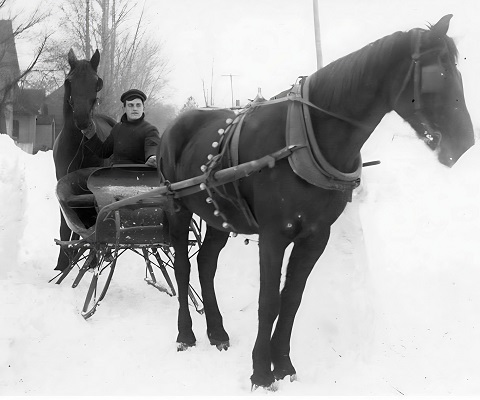
Delaware Anglicans extended their recognition of Christmas beyond just the actual day. Kent County resident Thomas Rodney, brother of Caesar Rodney and an Anglican, provides a vivid description of the yule season in the mid-eighteenth century. Rodney recalls in "Colonial Delaware, a History," as quoted by author John A. Munroe, "On Christmas Eve there was an universal firing of guns, and traveling round from house to house during the holiday, and indeed all winter there was a continual frolic at one house or another, shooting match, twelfth [night] cakes, etc."
Rodney's description also offers insight into the broader social context of frontier Delaware during this period. He notes that before the French and Indian War, life for white inhabitants was "very simple, plain, and social." The agricultural cycle provided ample time for leisure and merriment, particularly during the winter months. Rodney observes, "The largest farmers... did not sow over twenty acres of wheat, nor tend more than thirty acres of Indian corn, and there was very few of this sort, so that all the families in the county had a great deal of idle time."
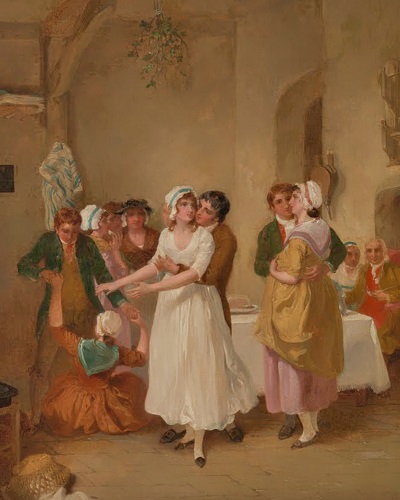
Rodney describes a variety of activities that were part of the holiday season: "At which... the young people would dance, and the older ones wrestle, run, hop, jump, or throw the disc or play at some rustic and manly exercises." These activities reflect a blend of Old World ways and New World adaptations, creating a unique local Christmas culture.
It's interesting to note that Anglican Christmas rituals were so prevalent in that era’s Delaware. W. Emerson Wilson elaborates on this phenomenon, noting, "The Church of England was not an established church in the Three Lower Counties as it was in nearby Maryland and in Virginia, but it did have a relatively large membership and many of the unchurched when required to give a religious affiliation listed the Church of England" (The News Journal, Dec 20, 1975).
Munroe adds that while Anglican churches were fewer in number, "more people in the Lower Counties were probably members of the Anglican church than of any other, even if they rarely attended services except for Easter, Christmas, baptisms, weddings, and funerals." Parishioners likely observed Anglican Christmas customs widely throughout the colony, even if regular church attendance was not universal. By the eve of the American Revolution, Delaware boasted twelve Anglican churches.
The influence of the Anglican Church on Christmas in pre-independence Delaware was not without its complexities, particularly as tensions rose between the colonies and Britain. "Some patriots were wary of their priests since the latter were paid by funds from England and had pledged allegiance to the king as head of the Church,” Wilson notes, “but there was as yet no bitter cleavage."
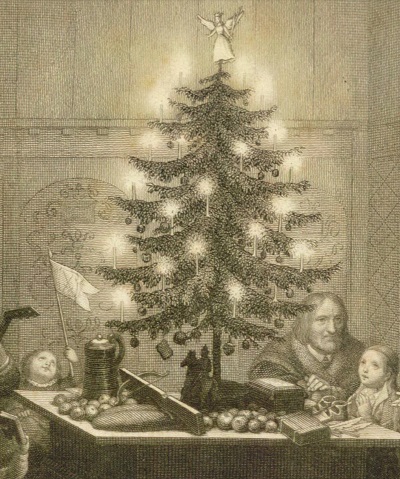
Some Christmas norms we associate with the holiday today existed in Delaware at the time, but others had yet to be introduced. "There was little or no exchange of gifts,” Wilson points out. “That custom and Christmas trees would not be introduced until years later" (The News Journal, Dec 20, 1975).
Anglican conventions shaped a lively holiday season in colonial Delaware, from evergreen-decked churches to bountiful feasts and social gatherings. Popular hymns like "Hark! The Herald Angels Sing" provided a familiar soundtrack, connecting New World life to broader Anglican practices. These customs created key moments for social bonding and cultural expression, revealing a society that valued community and heritage. The traditions, later carried on by Episcopalians, continue to influence modern Christmas celebrations, highlighting the enduring nature of holiday customs.
|