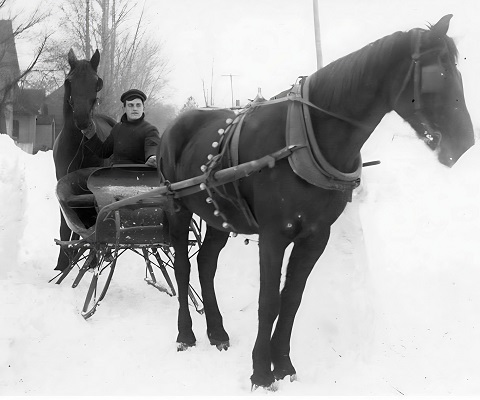
 Emily Bissell's 1907 Christmas Seal campaign in Delaware sparked a national movement, raising funds to fight tuberculosis and revolutionizing public health efforts.
A shadow loomed over the jolly spirit as the Christmas season of 1907 approached in Delaware. Tuberculosis, a deadly disease that had claimed 56,770 lives across the United States in 1905, was still ravaging communities. In Wilmington alone, the disease known as "consumption" was responsible for 150-200 fatalities annually. While families prepared for holiday gatherings, confusion and fear surrounded the mysterious illness. Little did they know that this Christmas would mark the beginning of a hopeful tradition in the fight against tuberculosis, one that would spread joy and progress far beyond Delaware's borders.
Wilmington newspapers frequently reported high TB death rates in workhouses and prisons. Class prejudice against this infected community was just one hindrance against efforts to eradicate TB. Furthermore, a cure remained unavailable, and the discovery of antibiotics was still over two decades away.
Wilmington responded to this crisis by building its first tubercular (TB) sanatorium in 1907. The city's medical community had formed the Anti-Tuberculosis Society (ATS) in the summer of 1906 to raise public awareness. Doctors believed that the best way to treat TB was to isolate patients and provide them with ample fresh air, no matter the outside temperature.
In June 1907, the ATS began constructing "shacks" in Brandywine Hundred, initially aiming to care for 10 patients. These Brandywine Shacks relied entirely on private donations, as Wilmington's city council had not yet declared TB a public health crisis. Limited funding forced the ATS to build the shacks with cheaper materials, and the doctors warned they would abandon the project without public support.
The shacks quickly filled up despite the challenges. More space was needed, though. Fundraising efforts such as bake sales simply weren't enough to cover costs. By year-end, the enterprise was already in deep financial trouble. The ATS considered admitting patients for free. Finally, the Delaware Branch of the American National Red Cross Society resolved the impasse by offering to collaborate with the ATS.
At this critical juncture a key figure in Wilmington society stepped forward with a revolutionary idea. Emily Bissell, local Red Cross secretary, had a personal connection to the TB cause—her cousin, Dr. John Wales, was the sanatorium's director. However, Bissell was far more than just Dr. Wales' cousin; she was a formidable presence in Delaware's civic and charitable circles with a long-standing track record of leadership and influence.
Bissell's rapid rise to prominence was, in part, due to her distinguished heritage. She was descended from a long line of notable New England ancestors, some of whom were Pilgrims, while others were pioneers of Connecticut. This pedigree, combined with her intelligence and drive, opened doors for her in Wilmington's high society from an early age.
Bissell's involvement in civic affairs dated back to at least 1889 when, at the age of 28, she had served on a decorating committee for a Delaware Hospital fundraiser. By 1896, she was presenting papers on "Provident Schemes for Prevention of Pauperism" at charity conferences, demonstrating her ability to articulate complex social issues. Her rise through Wilmington's social and charitable circles was swift and steady. In 1897, she was elected Secretary of Associated Charities, and by 1899, she had secured a position on its Board of Managers. Bissell's influence extended beyond local charities; she was active in fundraising for The Grand Opera and served on the executive committee of the Colonial Dames of Delaware Club.
Bissell's reputation as a speaker and thought leader grew beyond Delaware's borders. In 1900, she addressed the National Women's Suffrage Association in Washington D.C., presenting a controversial anti-suffrage stance. Her argument that women could exert influence through traditional roles without voting rights showcased her persuasive skills and command of an audience. She boldly claimed to represent a "silent majority" of women who didn't desire the ballot, a position that, while contentious, further cemented her status as a voice to be reckoned with.
By 1907, when she proposed the Christmas Seal idea, Bissell had accumulated nearly two decades of experience in public speaking, charity work, and social leadership. She had served as treasurer for the "Summer Playgrounds" group, chaired the Social Service Committee of the State Federation of Clubs, and been re-elected as Secretary of the Delaware Red Cross. This extensive network and proven track record gave her the clout and connections necessary to approach the post office with her innovative fundraising idea.
With this background of influence and experience, Bissell urged the sale of one-cent Red Cross Christmas Seal stamps at Wilmington post offices. The campaign idea, once approved, encouraged even the poorest citizens to contribute to the fight against TB. Wilmington's first year stamp sales totaled over $3,000. The following year's national campaign netted over $100,000. The movement's momentum coalesced around Emily Bissell.
Bissell's anti-suffragist stance, while at odds with the progressive nature of her tuberculosis work, reflected a complex personality capable of holding seemingly contradictory views. She believed that women's traditional roles in philanthropy and social reform were more effective than political involvement. This conviction drove her tireless efforts in the fight against tuberculosis, seeing it as a way to effect change without entering the political arena she so distrusted.
Emily Bissell dedicated the rest of her life to the anti-tuberculosis movement and the ongoing Christmas Seal campaign. Her innovative idea not only saved Wilmington's TB sanatorium but also sparked a national movement that would continue long after her lifetime. The Christmas Seal campaign became a holiday tradition, reminding people each year of the ongoing fight against tuberculosis and other respiratory diseases.
By the time of Bissell's death in 1948, after 40 years at the helm of the Christmas Seals program, activities financed by the sale of seals in Delaware included nursing services for indigent patients, health education in schools and for adults, and the maintenance of Sunnybrook Cottage. Additionally, funds supported the rehabilitation of tuberculosis patients in sanatoria, tuberculin testing of special groups, the maintenance of three fluoroscopes in three county health centers, cooperation with the State and City Health Departments in mass X-ray surveys, and the operation of a chest X-ray diagnostic clinic in the offices of the Anti-Tuberculosis Society.
In recognition of her tremendous contributions, the US Postal Service honored Emily Bissell with a stamp in 1980, cementing her legacy as a pioneering philanthropist who transformed a local crisis into a national movement of hope and healing. As Delawareans today hang their Christmas decorations and send their holiday cards, Emily Bissell's TB Christmas Seals, now administered by the American Lung Association, continue to remind us of the power of community, creativity, and compassion in facing even the most daunting public health challenges.
|