 Explore how German Christmas traditions enriched Delaware's holiday celebrations, from festive foods to beloved customs, shaping the state's unique yuletide spirit.
Germany, known as "the Christmas country," enjoys renown for spirited yuletide celebrations. The Evening Journal on December 20, 1915, noted that the country earned this title "because the celebration of the Nativity is carried out with more feasting and merriment than in any other land."
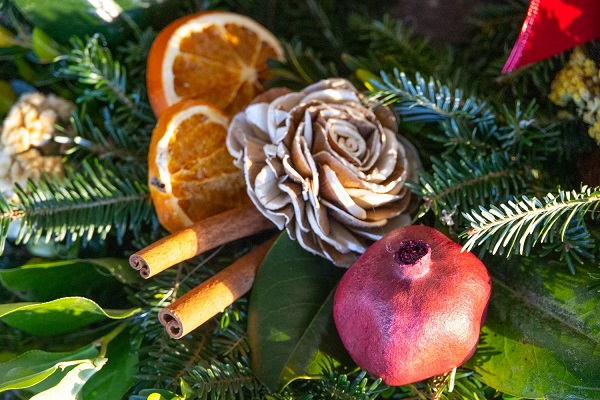
The Advent season, marking the four Sundays before Christmas, signals the start of holiday preparations in Germany. While the lighting of the first Advent candle is a common Christian practice, German families add their own traditions. The comforting aromas of honey, nuts, oranges, and spices fill homes during cozy 'Kaffeestunde' (coffee hour), where families gather to enjoy coffee and seasonal treats, eagerly anticipating Christmas.
The first Advent Sunday is followed by St. Nicholas Day on December 6th. In Germany, St. Nicholas is known by various names, including Nikolaus, Christ Kindlein (Kris Kringle), Pelznickel (from pelz, meaning fur), and Knecht Ruprecht. Among these, Nikolaus is the most popular name for the saint. On the evening of December 5th, St. Nicholas Eve, German children leave their well-polished shoes outside their bedroom doors in anticipation of a visit. Renowned for his generosity, St. Nicholas fills the shoes with small gifts and treats if the children have been good all year. The next morning, the children eagerly check their shoes to discover the surprises left by the beloved saint.
German immigrants brought this cherished custom to the United States in the 19th century, with shoes by the door replaced by stockings hung along the mantel, a tradition that has since become a beloved part of the holiday season for most American families.
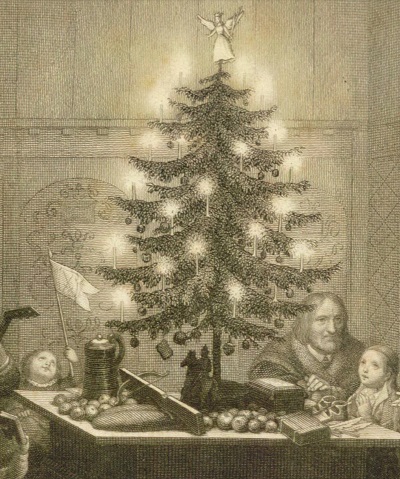
The Christmas tree tradition holds a special place in German holiday customs. Germans view the tree as an essential and ancient part of the observance, with its roots tracing back to at least the European Middle Ages. In the early 18th century, German immigrants brought this treasured practice to American colonies like Pennsylvania, when Delaware was still "the lower three counties" of that commonwealth. Dutch settlers may have also contributed to this custom. From 1654 to 1664, they governed the area that would later become Delaware as part of their New Netherland colony.
The tradition continued to spread and evolve over time. "If a family is too poor to have a whole tree," The Middletown Transcript noted on December 22, 1894, "a single branch only will stand in a conspicuous place, hung with the few simple gifts," emphasizing the importance of celebrating Christmas regardless of one's financial situation.
By the early 20th century, the Christmas tree had become a central part of the holiday celebration. The Evening Journal on December 14, 1920, described the tree as "brilliant with candles and tinsel and bending under its load of gifts." The festivities on Christmas Eve (Heiliger Abend) include families gathering around to decorate the Christmas tree (Weihnachtsbaum), a custom that of course has also spread to many other countries.
Presents for the servants and the poor are traditionally placed under the family tree, underscoring the central role of benevolence in the German celebration of Christmas.
Tinsel, a sparkling Christmas tree decoration, originated in Germany in the early 17th century. It was first made from real silver before being replaced by more affordable materials like aluminum and plastic. The German city of Nuremberg played a key role in popularizing this festive decoration, which has since become widely accessible and used around the world.
According to tradition, the 'Christkind' (Christ child) delivers the presents while the children wait eagerly outside the living room. One of the adults rings a bell for children to step inside, where the family will then sing carols before the bescherung (opening of gifts) begins. Some families head to Christmas Eve services at their local churches afterwards, while others may indulge in a festive meal.
Culinary delights are integral to German Christmas traditions, with Christstollen taking center stage. The Morning News described the dessert on January 11, 1898, as "a rather simple cake stuffed with almonds and raisins." Many households bake them to perfection, filling the streets with a delightful aroma.
Another beloved Christmas delicacy is marzipan, a sweet almond paste confection. The News Journal reported on December 15, 1900, that "in Germany children have long enjoyed the delicacy known as marzipan, which has only recently become popular in this country." Confectioners craft elaborate designs, such as fruits, flowers, and even portraits.
Honey cakes (lebkuchen), also known as pfefferkuchen, are essential to the German Christmas celebration. Dating back to the 14th century, these honey-sweetened cakes were originally crafted by Catholic monks. The News Journal once noted their variety, describing them in all conceivable shapes, from round to triangular.
The German nutcracker, often crafted as a soldier, king, or other whimsical figure, originates in the late 17th century in Germany's Ore Mountains. These intricately carved wooden figures were initially designed as functional tools for cracking nuts but soon evolved into decorative items representing good luck and protection. The tradition of nutcracker crafting spread throughout Germany, and by the 19th century, these figures had become iconic.
The classic German nutcracker has become a beloved symbol of Delaware's holiday season, prominently featured in decor from the Grand Opera House in Wilmington to local shops and markets statewide. Artisans and vendors offer a range of designs, blending traditional hand-carved styles with creations made from Delaware's unique materials, such as starfish and crabshells. Nutcrackers are a key element in community events like parades and tree lighting ceremonies, fostering a sense of togetherness and festive spirit. Schools and libraries also embrace the tradition, offering nutcracker-themed activities that introduce children to their cultural significance.
The spirit of German Christmas traditions is perhaps best captured in the caroling customs. Wilmington newspaper columnist Bill Frank shared in 1981: "I used to think the carols, 'Stille Nacht' (Silent Night) and 'O, Tannenbaum,' when sung in German, were among the loveliest of the Christmas repertoire. These Christmas hymns were the first I really enjoyed singing when I began caroling in the village of Arden more than 50 years ago. That was when I joined the Ardenfolk carolers at Grubbs Corner at Grubb and Marsh roads. As I recall it was a cold clear Christmas Eve with stars shining with unusual brilliance. I remember standing next to Frank Stephens, founder of Arden, as Earl Broadbent led us in singing 'Stille Nacht.' The carol even in English is beautiful, but in German, I felt then, it was even more moving and tender. I also recall strolling along the Arden paths and pausing outside the home of a German family where we sang with gusto, 'O, Tannenbaum,' in German of course. It seemed to express all of the charm of the Christmas tree."
All these celebrations---the tree, the foods, the caroling---embody the universal traditions of goodwill and generosity. "The little ones are early taught to think of those less fortunate than themselves at the season of all others when peace to man should be abroad over the land like a benediction," The Middletown Transcript reflected on December 26, 1896. This sentiment perfectly encapsulates the true meaning of Christmas and the values deeply ingrained in the German holiday tradition.
Christmas in Germany is a time of great merriment, kindness, and cherished practices passed down through generations. From the elaborate Christmas trees adorned with tinsel to mouth-watering treats like Christstollen, caroling, and nutcrackers, the German yuletide experience is joyous and unforgettable, leaving a lasting impact on American holiday traditions.
|