 Delaware's growing Hispanic population enriches the state with vibrant Christmas traditions from Mexico, Guatemala, and Puerto Rico, blending Catholic faith and cultural customs.
Delaware's rapidly growing Hispanic population has introduced vibrant Christmas traditions from Mexico, Puerto Rico, and Guatemala in recent decades. Catholic religious observances blend with indigenous customs in these celebrations, creating colorful and joyous festivities that often last for days or even weeks. Each culture brings its own unique customs to the holiday season while sharing many similarities due to their common Catholic heritage and Latin American roots.
Devotion to Our Lady of Guadalupe is a cherished tradition for many Mexican-Americans in Delaware. The story of Our Lady of Guadalupe dates back to 16th century Mexico. Gary Soulsman recounts in a December 12, 2009 article in The News Journal: "Mary appeared in 1531 to a humble indigenous man—Juan Diego—on an early morning walk near Mexico City in the guise of a young Aztec woman who offered love and protection for the followers of her son. A farmer, Diego was one of the first converts to Christianity after the Spanish conquest of Mexico. In 2002, Diego was canonized a saint."
The feast day of Our Lady of Guadalupe on December 12 kicks off the Christmas season for many. Our Lady of Guadalupe holds deep significance as a uniquely Mexican manifestation of the Virgin Mary.
Rene Canales, a priest at Our Lady of Guadalupe Parish Shrine in New Jersey, explained in a December 20, 2021 News Journal piece: "Our Lady appeared as a mestizo (a person of mixed European and indigenous ancestry) to show the people, 'I am one of you.' She unified the Spanish and the natives, and even today she brings us together."
Mexicans began to see Our Lady of Guadalupe as a powerful symbol of the country's identity and faith. Julie Rivera, a choir member at St. Paul's in Wilmington, expressed: "She is a symbol of dignity, hope and compassion." Tony Imhoff, another choir member, added: "Our Lady of Guadalupe continues to be an inspiration for all who are marginalized."
Las Posadas, which means "the inns" in Spanish, is a beloved Christmas tradition shared by Mexican and Guatemalan communities that has taken root in Delaware. Writer Micaela Hood explains in a December 20, 2021 article in The News Journal: "Las Posadas dates back to the 1500s, when Christian evangelists seeking to convert the indigenous people of Mexico realized they could teach them their faith through the ritual re-enactment of Biblical stories. One of the most important stories they sought to dramatize was the nativity. Out of this emerged las Posadas."
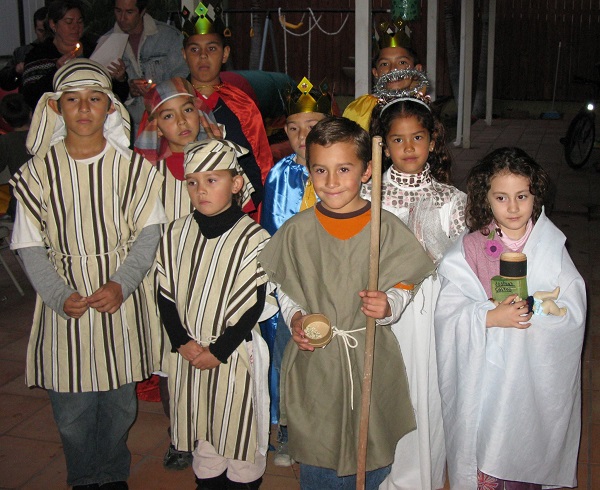
The nine-day celebration from December 16 to 24 reenacts Mary and Joseph's search for lodging in Bethlehem, with nightly processions where participants go from house to house seeking shelter. The celebration begins on December 16 and continues for nine nights, culminating on December 24 with Nochebuena (Christmas Eve).
While both Mexican and Guatemalan immigrants celebrate Las Posadas, there are some distinctions in their practices. In Guatemalan traditions, the processions are often more elaborate, with participants carrying religious images from house to house. Different families host the event each night, leading up to a final communal gathering. Mexican celebrations, on the other hand, tend to focus more on the reenactment of Mary and Joseph's journey, with participants often dressing up as the holy couple.
In Delaware, Las Posadas celebrations have adapted to fit the local environment while maintaining their spiritual and cultural significance. Annette C. Silva described a Posada reenactment at the Latino Cultural Center in Georgetown in her December 12, 1996 article in The News Journal: "Juan Perez and Jane Goodman display pastoral garb as they step rhythmically in a Mexican interpretation of Mary and Joseph's search for shelter. Bearing candles, wearing solemn expressions, the Central and North American actors seek a safe place to stay for the birth of Christ."
The processions often feature people dressed as Mary and Joseph, sometimes even with a live donkey. Participants carry candles and statues of the holy family as they go from place to place, singing traditional songs. At each stop, there is a call-and-response exchange between those outside seeking shelter and those inside. Margie Fishman captured the poignant lyrics of this exchange in a December 23, 2012 article in The News Journal:
"En el nombre del cielo os pido posada." (In the name of heaven, I ask of you shelter.)
"Yo no debo abrir, no sea algún tunante" (I can't open up, you might be a rogue)
This continues for several verses until finally the "innkeepers" welcome Mary and Joseph inside. Once indoors, the celebration begins with prayer, music, food, and festivities for both children and adults.
For many Mexican and Guatemalan immigrants in Delaware, Las Posadas provides a vital connection to their heritage and homeland. Margie Fishman, in her December 23, 2012 article in The News Journal, wrote about Nicte Adan, who moved to Wilmington from southern Mexico. Adan recalled that as a child, she didn't anticipate Santa Claus, but instead looked forward to Las Posadas: "It was very exciting. That's what we were waiting for."
Now living in Delaware, Adan and her family work to keep the tradition alive, hosting their own Posada for their parish community. Adan explained that maintaining these customs is important even as they adapt to life in a new country. Adan replied, “We still celebrate it from our Latin roots,” when her husband suggested following American traditions. “We don't want to lose that."
The nine nights of Las Posadas culminate in Nochebuena on Christmas Eve. This is typically the biggest celebration for both Mexican and Guatemalan families, featuring a large feast, gift-giving, and Misa de Gallo (Midnight Mass). However, there are some differences in their traditions.
In Mexican traditions, Nochebuena often includes breaking piñatas filled with candy and fruits, symbolizing the triumph of good over evil. After Midnight Mass, families return home to open gifts and enjoy a late supper featuring dishes such as bacalao (salted cod), tamales, and romeritos.
Guatemalan Nochebuena celebrations, in contrast, place a particular emphasis on fireworks. The sky lights up with vibrant displays as the clock strikes midnight, marking the arrival of Christmas Day. Families gather for a late-night feast and open gifts at midnight.
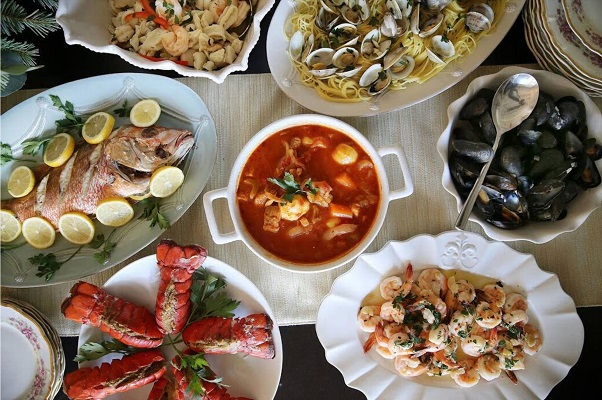
Food plays a central role in Christmas celebrations across Mexican, Guatemalan, and Puerto Rican communities. Cristian Salazar describes some of the rich holiday fare common in Mexican traditions: "Dark moles churned from chocolates and chilies; hot punch made from tejocotes, an apple-like fruit and piloncillo, blocks of unrefined cane sugar; and a selection of sweet or savory tamales served steaming hot."
Both Mexican and Guatemalan Christmas celebrations feature tamales, though they differ in notable ways. Guatemalans typically make larger tamales, wrapping them in banana leaves instead of corn husks, and filling them with ingredients such as chicken, pork, or vegetables, combined with a rich, thick sauce known as recado. These tamales are the central festive dish in Guatemalan Christmas celebrations.
Puerto Rican holiday foods include dishes like pernil asado (roast pork), pasteles (a type of tamale), arroz con gandules (rice with pigeon peas), and coquito, a coconut-based alcoholic beverage similar to eggnog.
Each culture brings unique traditions to Delaware's Christmas celebrations. In Mexican communities, Pastorelas - traditional plays that reenact the shepherds' journey to visit the baby Jesus - are popular during the holiday season. These comedic dramas often incorporate modern humor and provide entertainment for the whole community.
Guatemalan immigrants may celebrate La Quema del Diablo (Burning of the Devil) on December 7, marking the beginning of the Christmas season. This tradition, unique to Guatemala, involves lighting bonfires or burning effigies of the devil to cleanse homes of evil spirits and prepare for the coming of Christ. Some families may find alternative ways to observe this tradition, though it may be less visible in Delaware due to fire safety regulations.
Puerto Rican families often celebrate with parrandas, groups of friends singing traditional songs and playing instruments as they move from house to house. While full parrandas are less common now in Delaware, many families still incorporate music into their celebrations.
Mexican, Guatemalan, and Puerto Rican communities in Delaware work hard to maintain their Christmas traditions, though they have faced challenges in recreating the celebrations of their homeland. Kent Steinriede noted in a December 25, 2002 article in The News Journal that the cost of traveling back to their countries of origin for the holidays can be prohibitive for many immigrants. Additionally, increased border security has made such trips more difficult and dangerous in recent years.
There are also challenges in organizing large communal celebrations. Steinriede explains: "It's hard to organize fiestas and cultural events because colleagues here come from different backgrounds in Mexico and Central America."
Hispanic communities in Delaware have creatively adapted their traditions despite these obstacles. Churches and community organizations have been key in facilitating these celebrations. For instance, Trinity Episcopal Parish in Wilmington started celebrating Las Posadas in the late 1990s, encouraged by parishioners. The response was enthusiastic when Rev. Silvia Vasquez suggested the idea. Vasquez recalled, "They went wild in church." She initially proposed holding four Posadas, but church member Trinidad Martinez was adamant: "I said, 'No, in Mexico we do nine, and we're going to do nine.'"
For many immigrants, these traditions take on added significance as they navigate life in a new country. As Ana Carranza, who participated in a Posada in Wilmington, expressed in a December 20, 2021 article in The News Journal: "When we come to this country, we feel lonely. We try to get together to revive this tradition so we don't feel so lonely."
According to a December 23, 2012 article in The News Journal by Margie Fishman, Brother Chris Posch observed: "Every year, someone tells me I've been in the U.S. for 10 years and this is the first year it feels like Christmas." At the same time, Posch worries that the deeper spiritual meaning can get lost amidst commercialism: "Christmas is hijacked by Santa Claus, malls and materialism. But posadas remind us of the meaning of Christmas."
For families like Jose Lopez and Delia Gordillo Montes in New Castle, finding a balance between old and new traditions is an ongoing process. They also embrace aspects of American Christmas celebrations while they work to maintain customs from Mexico. Lopez explained in a December 20, 2021 article in The News Journal by Micaela Hood: "You need to follow the tradition of the country you're living in right now."
The growth of Mexican, Guatemalan, and Puerto Rican Christmas traditions in Delaware reflects broader demographic changes in the state. According to census data, Delaware's Hispanic population nearly doubled between 2000 and 2010, rising to about 8% of the state's total population. Nationwide, the Hispanic population increased by 58% during this same period.
Mexican immigrants form the largest Latin American group in Delaware, representing about 15% of the state's immigrant population. Additionally, Guatemalans have become a significant presence, particularly in Sussex County, where they make up around 30% of the Hispanic or Latino population. Puerto Ricans, while not as numerous as Mexicans or Guatemalans in Delaware, have been part of the state's community for many decades.
The growing Hispanic population has transformed religious and cultural life in Delaware. In 2012, Brother Chris Posch noted that Hispanics represent about half of the more than 200,000 church members in the Diocese of Wilmington. Many parishes now offer Spanish-language masses and have incorporated Latino traditions into their holiday celebrations.
The influence of these traditions extends beyond the Hispanic community as well. Some churches have begun offering bilingual services and inviting non-Hispanic parishioners to participate in posadas and other celebrations. This cultural exchange has enriched Delaware's holiday landscape, bringing new foods, music, and customs to communities throughout the state.
The Christmas traditions brought to Delaware by Mexican, Guatemalan, and Puerto Rican immigrants have become an integral part of the state's social framework. From the candlelit processions of Las Posadas to the joyous sounds of parrandas and the vibrant fireworks of Guatemalan Nochebuena, these celebrations add richness and diversity to Delaware's holiday season. Many families have found creative ways to maintain their heritage while adapting to life in a new country.
Delaware's Hispanic population continues to grow and diversify, so its Christmas traditions are likely to evolve further, blending elements from various Latin American cultures. We have highlighted Mexican, Guatemalan, and Puerto Rican traditions, while Delaware is also home to communities from El Salvador, Honduras, Costa Rica, the Dominican Republic, Colombia, Venezuela, and others. Each group brings unique holiday customs, contributing to increasingly diverse and vibrant celebrations in the coming years.
|