 Delaware's Anabaptist groups like the Amish and Mennonites skillfully balance age-old traditions with modern hurdles such as rising land prices.
Late Amish Arrival in Delaware
Delaware became a haven in the early 20th century for Anabaptist communities, most prominently the Amish, Mennonites and Dunkards. These groups harmonize tradition, community involvement, and spirituality while also confronting modern challenges. Escalating land prices and urban expansion are among the ongoing issues they face. Delaware’s Amish settlements date to 1915, when families emigrated from McMinnville, OR, probably leaving because of a community squabble, according to Delaware historian Allen B. Clark. They settled in Kent County because of the cheap land. They traveled not by horse and buggy, but by train.
J.K. Miller, one of the first Amish settlers in Kent County in 1915, wrote to The Budget, the national Amish newsletter: “It is beautiful level country, no stones, land easily cultivated. Fine farms can be had for $30 an acre.” Wrote another: “We would like to see more of our people here. We think this is good country.”
The late arrival of the Amish in Kent County, Delaware, could be attributed to various factors: Firstly, economic conditions, such as land availability and pricing, play a pivotal role in community relocation decisions. Areas like Pennsylvania offered more fertile farmland, making it a more attractive destination for the Amish in earlier years.
Secondly, existing social and religious networks in other regions could have acted as a centripetal force, keeping the Amish in areas where they had already established communities. This could explain the higher concentrations of Amish populations in states like Ohio, Indiana, and Pennsylvania prior to the 20th century.
Lastly, other sociopolitical considerations, like religious freedom and community tolerance, could also have influenced the Amish’s decision-making process when considering where to establish new settlements. The relative lateness of their arrival in Kent County might imply that these factors only became favorable around 1915.
Buggies and Schoolhouses
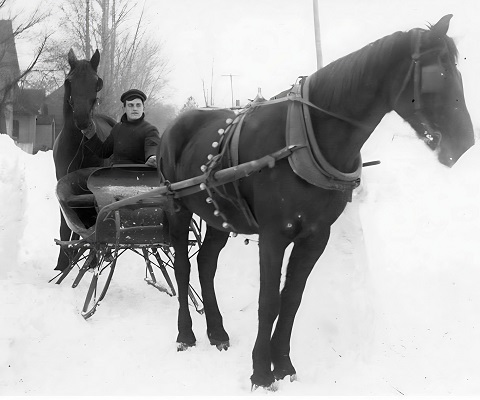
Amish buggies serve as key symbols of Amish culture and tradition. They capture the community’s dedication to simple living, free from unnecessary modern distractions. Car ownership was rejected about 1915, because it allowed individuals to travel, separating them from home, allowing youth to visit urban worlds of vice, pulling the community apart. Buggies, by contrast, symbolize a deep-rooted commitment to humility and simplicity, as well as reinforcing community cohesion.
Amish children, even into the late 1990s, learned the same basic subjects as their parents and grandparents in the one-room schoolhouse–often from the same textbooks.
This stands in stark contrast to neighboring state schools, which rush to keep students on the cutting edge with updated curricula.
“It is this kind of leveling in the Amish experience that sustains the culture,” noted Conrad L. Kanagy, an associate sociology professor at Elizabethtown College, 20 miles from Lancaster, PA.
Amish Youth Choices
Critics say the Amish deprive their children of higher education and the high-tech advantages of the modern age. Their youths cannot make informed choices if they have never been exposed to the outside world.
The Amish response is that their children are free to leave the community to explore what the world has to offer — after eighth grade and before their adult baptism. The baptism, usually between 18 and 21, is when they make a lifetime commitment to the “ordnung,” the unwritten rules of the Amish.
Anabaptist Wedding Rituals
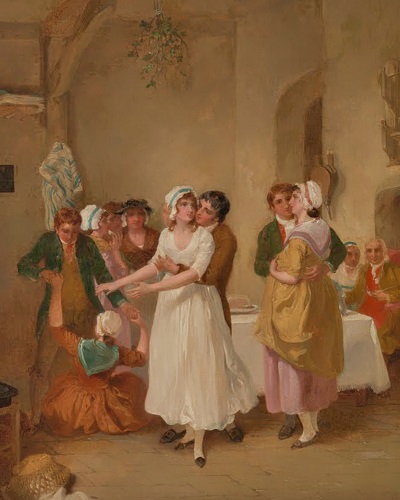
The community’s wedding practices add another layer to these deeply rooted customs. Courtship and marriage involve a distinct set of rituals. A young man, after deciding to propose, first informs the church deacon of his intentions. The deacon then discusses the matter with the young lady’s father. If both parties agree, a wedding ceremony takes place, typically Tuesday through Thursday. Those days of the week are relatively open for various tasks, allowing weddings to fit more easily into the farming routine. This scheduling is particularly convenient in late fall and early spring, before the onset of intensive outdoor work.
The community needs a full day to prepare and clean up for the event. Weddings aren’t celebrated on Mondays and Saturdays, as it’s considered sacrilegious to have to work or clean on Sundays. Friday is pie-day, the day to bake for the upcoming Sunday and for the following week.
The community gathers for an extravagant celebration that can last from morning until the next day, featuring an array of foods from roasted geese to shoofly pies to heaps of mashed potatoes. The beverages often include wine, specially made from dandelions or berries by the bride’s father and stored from the time of her birth.
Dunkards and Mennonites
Around 1904, another Anabaptist faction, the Dunkards, settled just east of Greenwood in Oakley and Owens Station. Farming is their principal occupation, and they’ve significantly bolstered the region’s agricultural yield. Emphasizing fiscal responsibility and innovative farming practices, the Dunkards own their farms.
They may resemble the Amish as they exit their place of worship, arm-in-arm. The women wear black bonnets and shawls and carry their Bibles. At times, they pause to say farewell to others. But then they step into automobiles.
The Mennonites in 1662 tried to colonize a 25-member community around Lewes called Plockhoy, under Dutch protection. Power struggles between the Dutch and the British over area sovereignty doomed the little settlement.
Sir Robert Carr, Governor of New York, reported back to British ministers in 1664 that he had “destroyed the quaking colony of Plockhoy to a nail.” By 1919 Mennonites had settled among the Dunkard community in Owen Station and Oakley and were holding Sunday meetings in area farmhouses. They later built their own places of worship and schools at Greenwood and Cannon.
Community Variations
Divergences mark these Anabaptist communities, especially on the issue of excommunication. By 1930, the Amish had adopted a policy of social ostracism for excommunicants, while the Mennonites limited the practice to spiritual matters within the church.
Financial stewardship also varies. Mennonite deacons annually evaluate parishioners’ fiscal health, demanding contributions under the threat of excommunication—a fate greatly feared within the community.
Meanwhile, the Amish distinguish themselves into Church Amish and House Amish. The first worship in churches and are perhaps less distinctive in their customs. You can tell House Amish property, meantime, by the color of the barns and houses. Their taste in color is inherently brilliant and is applied to dress as well as structures.
They gather in the home of one of the members, whose turn for entertaining the group comes perhaps once each year, and here, from about 8 o’clock in the morning until noon, they observe a long session of sermon and prayer. The sermons are recapitulations of the Bible, beginning with the story of Adam and Eve, and ending with the promises of Revelation.
After the service is concluded, the host treats the entire congregation to a magnificent feast.
Anabaptist Impact
Anabaptist communities enrich Delaware’s religious and cultural life. They demonstrate resilience and adaptability. They also find a balance between modernity and tradition. Meanwhile, their contributions bolster the state’s economy. Their presence acts as a guide for harmonizing tradition and change.
|















My grandmother on my maternal side was born into, as she told me, old order Amish settled in Flora, Indiana. A descendent of the Flora family contacted me about 10 years ago for information about the Replogles for a history of the community. Fortunately, my grandmother gave me her picture album with pictures of the Replogle family from the 1930s 40s and 50s.
Although my grandmother, her sister and her two brothers never practiced any Amish, probably because her mother and father left the community for reasons unknown. My twin brother and I, along with our grandparents, visited twice in the early 1950s. Our relatives there had huge farms--very prosperous ones. They dressed in the old style and inside their farmhouses they practiced the old ways like having a room with a very large loom for weaving.
However, they had a new Cadillac and spend the winters in Florida as well as using mechanized equipment to farm. Roger and I were about 5. There is a picture of us being pulled in a wagon by a young boy about our age who had his own miniature running tractor. We were green with envy.
Most of my German, married into Polish, family is from north-central Wisconsin. Originally homesteaders and farmers. When I left for college in the 1960s there were no Mennonites. But in the years since, when the children of farmers left for the city or college and didn't want to farm, the older farmers sold out to the Mennonites so they could retire and much of that area is now in the hands of Mennonites, adding a colorful new aspect to the farming communities with their frugal and down-to-earth ways.
Ron