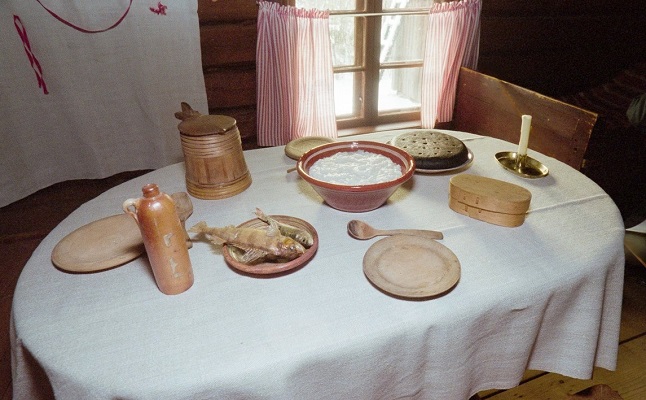
 Finnish settlers arrived in 17th-century Delaware, blending Finnish, Swedish, and later Dutch cultures. Their traditions, including festive Christmas customs, left lasting cultural imprints despite political changes and eventual assimilation.
The story of Finnish Christmas customs in 17th century Delaware begins with the arrival of Finnish settlers in the New World. As subjects of the Swedish Crown, Finns were integral to Sweden's ambitious plan to establish a foothold in North America, specifically in the Delaware Valley. This endeavor, known as New Sweden, would become a fascinating chapter in early American colonial history, blending Swedish and Finnish, and later Dutch, cultures in a new and unfamiliar land.
The colonization effort was spearheaded by the Dutch-Swedish New Sweden Company, under the leadership of the German-born Peter Minuit. Notably, the Company's board included a Finnish admiral, Klas Fleming, highlighting the Finnish involvement from the project's inception. In 1637, two ships - the Kalmar Nyckel and the Fågel Grip - set sail for the New World, carrying the hopes and dreams of the Swedish Empire and its Finnish subjects.
These vessels arrived in 1638, marking the beginning of the New Sweden colony. Upon arrival, the colonists' first order of business was to secure land from the native Americans. This transaction allowed them to establish Fort Christina, named in honor of the Swedish queen. The colony's population was notably diverse from its inception. As noted in the historical record: "It is estimated that about half of the approximately one thousand colonists in 'New Sweden' were either Finns who had first settled in Värmland, Sweden, or who came directly from Finland," states the “Finns in America: A Chronology” research guide at the Library of Congress.
This significant Finnish presence would play a crucial role in shaping the colony's culture, including its Christmas traditions.
The history of New Sweden was relatively short-lived. In 1655, merely 17 years after its establishment, Dutch colonists took control of the small settlement. The year 1664 saw two significant events: the arrival of a final group of 140 Finns, and the transfer of the area's ownership from the Dutch to the English. Despite these political changes, the Finnish influence on the region would persist, leaving a mark on local culture and traditions.
The legacy of this early Finnish settlement lived on in various ways. Place names near the Delaware River, such as Finland (Marcus Hook), Nya Vasa, Nya Korsholm, Tornea, Lapland, Finns Point, and Mullica, serve as linguistic reminders of this Finnish presence. Moreover, some historians have suggested that the log cabin, an iconic symbol of American frontier life, was a Finnish contribution to the New World.
Despite the political changes and challenges of establishing a new life in an unfamiliar land, the Finnish and Swedish settlers of Delaware worked diligently to preserve their traditional Nordic Christmas customs. For approximately 60 years before the establishment of Old Swedes Church, these settlers informally maintained many of their cherished holiday traditions, effectively transplanting a piece of their homeland to the shores of the New World.
E.A. Louhi's work, "The Delaware Finns; or, The first permanent settlements in Pennsylvania, Delaware, West New Jersey and eastern part of Maryland," provides a vivid and detailed account of these festive traditions.
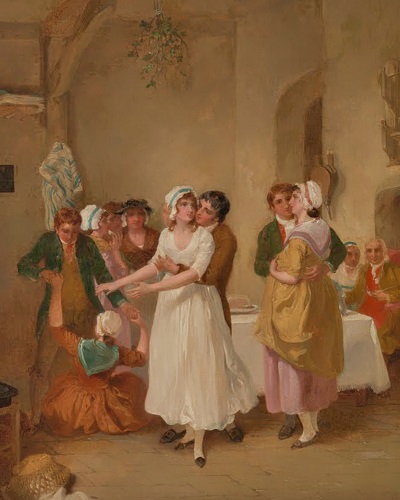
One of the most meaningful traditions was the Christmas Eve gathering. Louhi describes how a peasant landlord would extend an invitation to his tenants, welcoming them into his home for an evening of communal celebration. He writes:
"In the large, rustic hall of the house, by the blaze of fire in the large fireplace, a supper was enjoyed, Christmas hymns were sung, and holiday stories were read."
This gathering served multiple purposes. It reinforced the bonds of community, provided a space for shared cultural experiences, and allowed for the continuation of traditions from the old country.
"The evening concluded with the distribution of gifts to the tenant families, consisting of farm products like sweetened rye bread and pork," Louhi says.
These gifts, while simple by modern standards, were valuable commodities in the colonial era and represented both practical assistance and symbolic connection to agricultural traditions.
As the settlement of Wilmington grew, reaching more than 120 houses by 1742, the focus of Christmas celebrations began to shift. Louhi notes that Trinity Church became "more and more the object of attention," indicating a gradual formalization of religious observances within the community.
The journey to church on Christmas morning became a spectacle in itself, blending practicality with festivity. Louhi provides an evocative description of this pre-dawn travel:
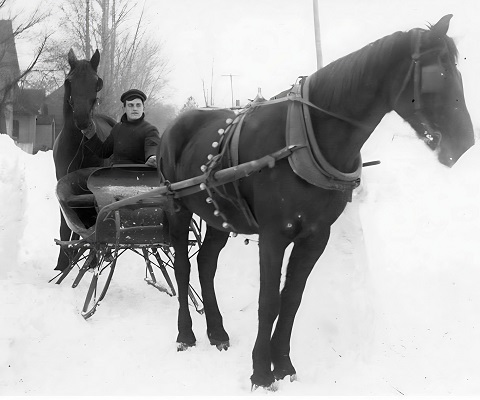
"For the journey to the church, the horses were harnessed luxuriously, and a great number of bells were attached to the harness. Early on Christmas morning the countryside was then one hum of bells, after intervals superseded by the toll of the church bells, as the people rode to the Matins in sleighs."
This description captures not just the visual aspect of the journey, but also its soundscape, with the jingling of sleigh bells giving way to the more solemn tolling of church bells. It's a vivid reminder of how the settlers transformed their new environment into a space that echoed with the familiar sounds of their homeland.
The church itself was decorated in a manner designed to inspire awe and reverence. Louhi describes the scene: "The church itself was a sight to behold, with large windows full of lit candles, arches with candles over the aisles, and reflections from the chandeliers and gilded altar ornaments creating a brilliant atmosphere."
This elaborate decoration created a space of light and warmth in the depths of the winter season, a powerful symbol of faith and community in the New World.
Amandus Johnson, in his work "The Swedish settlements on the Delaware," provides additional details about the Christmas traditions of these early settlers, emphasizing the blend of Swedish and Finnish influences. Johnson's account offers a more intimate look at how individual homes were prepared for the holiday season.
One particularly interesting custom involved the preparation of floors: "Many peculiar customs were and are observed in Finland and Sweden on these festive days, especially at Christmas, and some of these must have been practiced in the colony. [...] It was customary to cover the floors with straw or finely cut spruce branches."
This practice was more than mere decoration. It was imbued with symbolic and practical significance: "This straw was later thrown into the fields to produce good crops, or tied around fruit trees, or given to the cattle, all for the purpose of bringing good results."
Such customs reflect the agrarian nature of the settlers' lives and their desire to ensure prosperity in the coming year.
The blending of practical concerns with supernatural beliefs was a common theme in these Christmas traditions. Johnson describes how some homes displayed large crosses made of straw outside: "Outside some homes, large crosses made of straw were displayed as a protective charm against evil spirits—a custom prevalent in both Finnish and Swedish traditions."
This practice extended to other aspects of daily life as well: "A cross might also be seen on barrels and other vessels, painted there before the Christmas holidays, all for the purpose of driving away the evil spirits."
The Christmas customs of the Finnish settlers also extended to the care of livestock and nature, reflecting their deep connection to the land and their agrarian lifestyle. "The teeth of the cattle,” says Johnson, “were often rubbed with salt and they were given extra feed on Christmas Eve; nor were the birds neglected, sheaves of rye or wheat being placed on poles for them to eat; steel was also placed in the barn and on the barn-door, that evil spirits should not enter."
These customs reflect a worldview that saw humans as stewards of nature, responsible for the wellbeing of their animals and the land itself. The practice of providing food for wild birds is particularly touching, suggesting a desire to extend the spirit of Christmas generosity beyond the human community.
The use of steel as a protective charm against evil spirits is an interesting detail, hinting at the persistence of pre-Christian beliefs alongside Christian observances. This syncretic approach to faith and tradition was common in many rural communities in Europe and was clearly transported to the New World by the Finnish settlers.
It's worth noting that the Finns had a particular reputation among the other settlers. Johnson writes: "It was a common belief from the earliest times that the Finns possessed particular powers of performing supernatural things. In Sweden they were looked upon as masters in the art of witchcraft and sorcery and the reputation followed them to America."
This reputation had real consequences for some Finnish settlers: "'Lasse the Finn' and 'Karin the Finnish woman' being accused of witchcraft and separated from the main settlement during the governorship of Johan Björnsson Printz (1643-1653)."
Christopher L. Ward, in his work "Dutch and Swedes on the Delaware," elaborates on this reputation: "By common repute, the Finns were warlocks of distinguished eminence. Magic was native to them, wizardry was their birthright, sorcery their peculiar province. Only the Lapps, their blood brothers, excelled them in the black arts."
While such beliefs may seem superstitious to modern readers, they were an integral part of the cultural landscape of the time and influenced how Finnish Christmas customs were perceived by other settlers.
The actual Christmas Day was marked by lengthy church services. Johnson describes: "Early on Christmas morning, the settlers assembled in the church on Tinicum Island, listened to two services, which lasted four hours or longer, and then returned to their homes."
This commitment to religious observance on Christmas Day demonstrates the central role that faith played in the lives of these settlers.
The day after Christmas, known as Second Day Christmas, was a time for community gatherings and the sharing of stories. Johnson notes: "These visits were probably enlivened by the telling of old stories and personal experiences. The stories of ghosts, of giants, of dwarfs and of evil spirits, circulated in the home districts of the colonists, were of course transplanted to the Delaware region and related here to the rising generation, while the Dutch folktales added to the general store."
These storytelling sessions served multiple purposes. They provided entertainment during the long winter nights and helped to bind the community together through shared narratives.
Despite the rich traditions and strong cultural identity of the early Finnish settlers, their distinct presence in the Delaware region gradually faded over time. John H. Wuorinen, in his work "The Finns on the Delaware," provides insight into this process of assimilation.
The primary factor in this cultural shift was intermarriage. As Wuorinen notes: "Intermarriage of the Finns with Swedes, Dutch, and English meant the end of their identity. As the eighteenth century progressed, the Finns had become fully Swede or English."
This process of assimilation was accelerated by the rapid population growth in the colonies. Wuorinen writes: "The extraordinary growth of the population during the preceding half century had submerged the minority groups such as Finns and Swedes and had speeded their amalgamation with the dominant English element."
By the time of the American Revolution, the distinct Finnish identity in the Delaware region had largely disappeared. Wuorinen observes: "By that time, a few descendants of the original colonists on the Delaware had risen to local prominence or to more conspicuous service in the state and nation. But the majority lived their lives as farmers, men of business, or members of the rising professions in that anonymous way which is the wont of the common man."
The linguistic and cultural assimilation was complete: "Finn and Swede alike had become English in speech, and American in manner of living, and New Sweden had become only an historical incident, largely lost in the greater more compelling and more dramatic story of a new nation in the making."
|