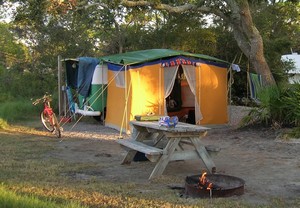
 Camping by the light of the silvery moon...
Happy motoring along the highways and byways of the Sixties as we embark on an imaginary, nostalgic camping trip to New Hampshire’s White Mountain National Forest campground-- Dolly Copp, the way it was—before the existence of wet wipes, sealable plastic sandwich bags, protein bars and shakes, bottled water, and the sophisticated pastime of RV-ing with 50-amp hookups and floor heat.
Gather ye round the campfire to keep the raccoons at bay with a round or two of Kumbaya, an African-American spiritual which gained popularity during the folk revival of the 1960s due to Joan Baez’s 1962 recording. Associated with the Civil Rights movement, the song also became a campfire standard that snapped, crackled, and popped while marshmallows toasted. "Someone`s singing, Lord, Kumbaya." A kumbaya tent revival pitched its peak during the Sixties when trailer travel was tire-thread hot.
Post World War II prosperity enabled millions of Americans to buy cars and head for them thar hills towing a trailer behind them. Pandering to this newfangled acquisition of hitch alongs, alluring black-and-white ads appeared in magazines such as "Field & Stream" and "National Geographic." Almighty aluminum trailer shapes ranged from the classic canned ham to lumpy lampoons like the Serro Hi-Lander.
Hi-Lo and Rolie offered crank-ups. Airstream went ballistic with Avion, Streamline, and Silver Streak. Their Bambi is still “a little honey of a trailer ready to go at a moment’s notice whenever you feel the urge.”
Another vintage trailer, the E-Z Kamper T-Bird with its red and white striped awning, is still “holding up” today as it did in its Sixties heyday.
Let’s not forget the VW camper, the vehicle of choice for nomadic Hippies who perfected living off the land in peace and harmony.
We’re ready to pitch our tent at Dolly Copp—nothing fancy, mind you. Those old fashioned green or brown square-ish tents made out of cotton canvas material without a waterproof tent floor could breathe naturally. There was enough space between the cloth threads to allow moisture in the air to escape outside. None of this modern nylon and other synthetic stuff which is too watertight for water vapor to escape, necessitating built-in ventilation. The ground will suffice for our mattress as sleeping bags had no pads to cushion our sacroiliac.
For goodness sake, this isn’t the Waldorf! We’re here to enjoy the rugged outdoors and work up an appetite for freshly caught trout sizzling in a cast iron skillet warmed by a fire. Kumbaya!
Even Dolly Copp couldn’t escape a citifying and sissifying makeover. In 1963 the installation of flush toilets in twelve modern lavatory buildings obliterated roughing-it in the woods. Eventually the Big Meadow section was expanded to make more spaces with easy access for trailers. Then, we could put away our flashlights when electric service came to Dolly Copp via underground power lines.
So our newfangled tents now have insect netting on the doors. We can make adjustments to allow warm air to escape in hot weather, and restrict air flow when it’s cold. It doesn’t mean we have to embrace high tech camping stoves or arrive at our campground destination in an RV. We can still have a kumbaya tent revival by rallying round the campfire to roast weenies and toast marshmallows by the light of the silvery moon.
|















as always, your retro 60s stir pleasant memories!!
I sang Kumbaya many times on civil rights retreats and conferences, but never around the campfire.
Ron