AuthorsDen.com  Join | Login 

 
Where Authors and Readers come together!

Authors | Books | Audiobooks | eBooks | Signed Bookstore | Stories | Articles | Poetry | Blogs | News | Events | Reviews | Videos | Success | Gold Members | Testimonials

Featured Authors:  Rachel Glasgow, iBryon Smith, iAnn Marie Hannon, iTracey Morait, iRobert Wood, i Dadfire, iAlexander Shaumyan, iMiller Caldwell, iMatt Miller, iSergio Serrano, Ph.D., i

  Home > History > Articles
Popular: Books, Stories, Articles, Poetry      Authors: A B C D E F G H I J K L M N O P Q R S T U V W X Y Z     

Dave Tabler

 Follow Me  

· 91 titles
· 46 Reviews
· Share with Friends!
· Save to My Library
·
Member Since: Jan, 2023

   Sitemap
   My Blog
   Contact Author
   Read Reviews


Books
· Delaware at Christmas

· Delaware from Freeways to E-ways

· Delaware from Railways to Freeways

· Delaware Before the Railroads


Short Stories
· She Denied to the Last.

· My First Audience

· The Fourth-Grade Paper That Gave Me Away


Articles
· My First Publication Was a Letter to Santa

· Em Dash and AI myths

· How to Ruin a Poem in One Easy Step

· Stories find us early!

· Just published—and already featured by the Delaware Division of Libraries!

· What Makes History Come Alive

· Antebellum Black Christmas

· Delaware’s Hispanic Christmas Traditions

· Kwanzaa’s Impact on Delaware’s Black Community

· The Feast of the Seven Fishes


News
· Back on DelmarvaLife to Talk Delaware Behaving Badly

· The Night Delaware Ran the Klan Out of Town

· Another Taste of 'Delaware Behaving Badly'—Out Jan 1

· 'Delaware Behaving Badly' Hits Shelves Jan 1—Here's a Taste

· Grateful for Delaware's Indie Bookstores

· An Evening with Dave Tabler at Huxley & Hiro

· Unwrapping History

Dave Tabler, click here to update your web pages on AuthorsDen.

Books by
Dave Tabler


See all Books
by Dave Tabler


From Hen House to Poultry Powerhouse
by Dave Tabler
Last edited: Monday, October 23, 2023
Posted: Monday, October 23, 2023


Delmarva's broiler industry got its start as a result of a shipping error.

Whether prepared through grilling, stewing, frying, baking, or broiling, chicken has become an American dietary staple thanks to the extensive poultry sheds in Delmarva. These large operations play a crucial role in the nation’s food chain, connecting our dinner tables with quality meat day after day in a new era of American consumerism.

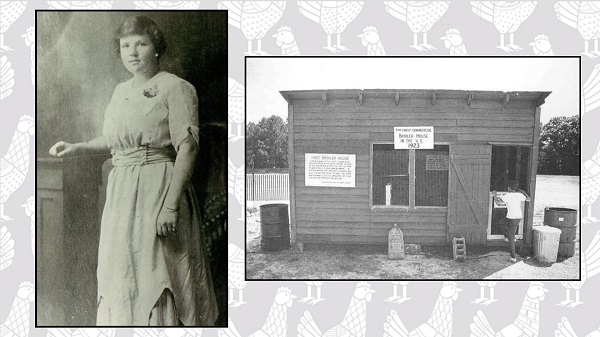
However, prior to 1923, chicken consumption was largely rural. Farmers of the day raised birds for their eggs. The only time chickens ended up in the stew pot was when they got older and slowed down in egg-laying. This old paradigm witnessed a significant transformation, all thanks to the persistent efforts of one individual, Delaware housewife Cecile Long Steele.

A pioneer of Delaware’s broiler industry, this lady found her footing in the business quite serendipitously.

Unlikely Pioneer Cecile Steele

Due to a clerical error at her supply hatchery, Cecile Steele in 1923 received a shipment of 500 chicks, even though she only recalled ordering 50. This unexpected delivery ended up sparking a significant revolution in the poultry farming industry.

Confronted with the challenge of caring for this huge, unexpected surplus of yellow chicks, she chose to keep the bounty. Perhaps she could earn additional income by selling the surplus as broilers. Steele promptly got busy and made way for additional housing to accommodate all of them.

The sudden influx of birds posed a significant problem, as Steele now had more chickens than she could let freely roam. Confronted with this head-spinning situation, she embarked on an innovative experiment. Steele decided to raise all 500 chicks in confinement.

It was a move that must have felt utterly counterintuitive to the average person: didn’t chickens require ample space to roam? Weren’t fresh air and sunlight essential for their wellbeing? As her son David Jr. Pointed out later, the concept of raising chickens solely indoors was a brand-new idea.

Steele had only paid for 50; if most did not make it, well, that was the gamble. Sixteen weeks in, Cecile Steele had her “Aha!” moment. Despite initial doubts, the overwhelming majority of the chickens survived to a marketable weight of 2-¼ pounds, earning Steele a surprising 62 cents per pound. Cecile was so pleased with her results that she started with 1,000 birds the following year— all to be sold as broilers – every one of them housed indoors.

The broiler-only approach must have seemed risky at the start of the 1920s. Chickens were still considered expensive. The average person had to work four hours to afford a home-cooked chicken. Enterprising farmers, and onlookers, wondered: was there a large enough audience to justify commercializing broilers ahead of egg production?

The Roaring ’20s dawned as a period of immense economic growth, providing Americans with more disposable income.

A societal shift in outlook, coupled with advancements in agricultural technology, greatly supported Cecile Steele’s entry into the broiler business. Additionally, the establishment of grocery store chains, from small towns to big cities, also played a significant role in boosting her business.

Consequently, chicken dinners, once regarded as a special occasion meal, evolved into a commonplace every-day staple gobbled up on tables across the nation.

Steele’s husband, David Wilmer Steele, soon quit his job as a Coast Guard captain to join her booming business.

Delmarva’s mild climate, sandy soils, abundant lumber, and proximity to big city markets made it an ideal location for this fledgling industry.

Building the Broiler Empire

Managing large poultry sheds presented new challenges, including maintaining optimal conditions, disposing of waste, and controlling diseases. Despite such day-to-day distractions, the Steeles continued to innovate, even shifting from standalone poultry sheds to connected structures.

The Steele’s success indeed inspired awe throughout the peninsula. Their less prosperous neighbors, observing this pioneering accomplishment, began to take notice.

Driven by a desperate need for profitable ventures, neighbors quickly aligned themselves with Cecile Steele’s methods. News of her innovative and highly lucrative enterprise permeated Delmarva. A contemporary journalist estimated that Baltimore Hundred alone raised 50,000 broilers in 1925. This boost to the local economy soon allowed Delaware to proudly claim the title of ‘Broiler Capital of the World.’

The Steele operations had soared by 1926 to about 10,000 chickens a year.

The Steeles’ business grew quickly and around 1934, D. Wilmer Steele formed the Indian River Poultry Hatchery in Ocean View with a partner, George Keen.

In 1937, David ventured beyond business, winning an election to the state Senate. Their success ended tragically when the couple died in a 1940 yacht explosion.

Despite their untimely death, the Steeles left behind a significant legacy. Their large-scale broiler model continues to fuel the global poultry industry. Cecile Long Steele, a 1983 Delaware Women Hall of Fame inductee, became a hero for her contributions to the world.

Yet for chickens across the globe, she embodies the symbol of their transition from free-range lives to commercialized lives.

Web Site: Dave Tabler


Want to review or comment on this article?


Need a FREE Reader Membership?

Reviewed by Ronald Hull
Reviewed on October 23, 2023
Thank you for the story of how chickens became a major food source. When I was growing up we always had chicken dinner on Sunday after church. Mom insisted on 6 week old broilers. They certainly were more tender the old hens and roosters that she had to eat when they were on the farm.

Colonel Sanders and Super Bowl buffalo wing snackers owe their good fortune to Cecile Long Steele.

Ron


New Articles by Dave Tabler
article Image
How a three-year-old's Christmas wish became a writer's first taste of being heard
My First Publication Was a Letter to Santa
article Image
Stop Calling the Em Dash Artificial.
Em Dash and AI myths
article Image
Poet Reaches for the Sublime, Printer Grabs the Swiffer
How to Ruin a Poem in One Easy Step
article Image
Coming full circle back to Gettysburg
Stories find us early!
article Image
That was quick!
Just published—and already featured by the Delaware Division of Libraries!
article Image
History deserves passionate storytellers
What Makes History Come Alive
article Image
Antebellum Delaware: Christmas highlighted stark contrasts between free and enslaved Black experiences, with churches, family, and hope for freedom sh
Antebellum Black Christmas
article Image
Delaware's growing Hispanic population enriches the state with vibrant Christmas traditions from Mexico, Guatemala, and Puerto Rico, blending Catholic
Delaware’s Hispanic Christmas Traditions
article Image
Kwanzaa in Delaware: A unique holiday tradition rooted in African American heritage, blending seamlessly with existing celebrations while emphasizing
Kwanzaa’s Impact on Delaware’s Black Community
article Image
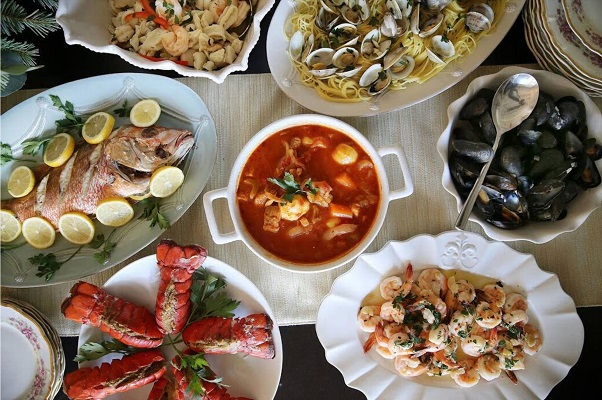
Delaware's Italian families carry on the Feast of Seven Fishes, adapting Southern Italian Christmas Eve traditions with local seafood and modern twist
The Feast of the Seven Fishes
article Image
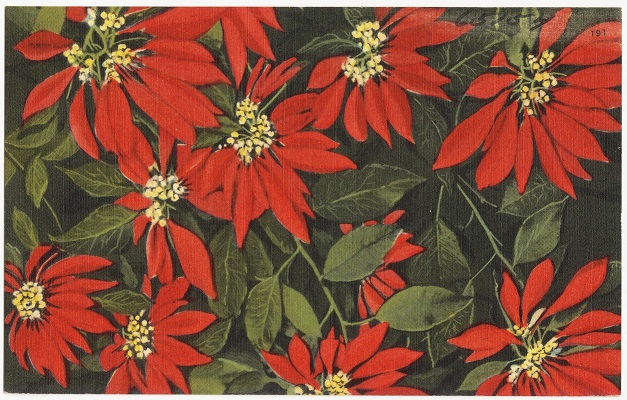
Trace the poinsettia's journey from Mexican legend to Delaware tradition, exploring its rich history, cultural significance, and enduring holiday app
The Poinsettia Moves From Mexican Legend to Delaware Tradition
article Image
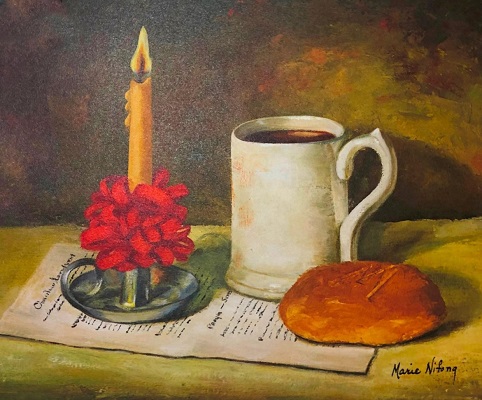
Explore how the Moravian lovefeast, a Christmas tradition of shared food and hymns, was embraced and adapted by Methodist and Presbyterian churches in
Delaware’s Evolving Christmas Lovefeast Tradition
article Image
Tracing Delaware's mummer tradition from colonial controversy to Halloween parades, and its modern revival in Middletown's satirical Hummers Parade.
Mummers in Delaware
article Image
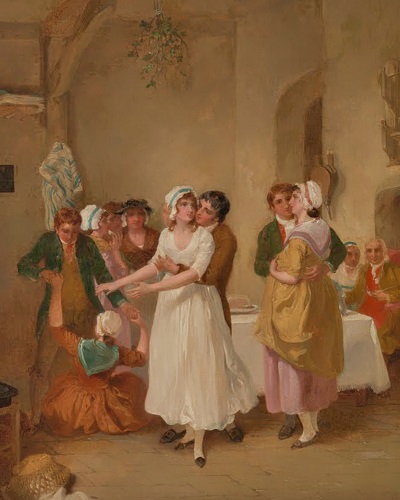
Delaware's dangerous mistletoe trade, from the 1800s to early 1900s, saw rural workers risk their lives harvesting the plant for holiday traditions an
The Romance of Mistletoe
article Image
Delaware's Christmas history reveals a darker side: from colonial raids to schoolboy pranks and racially charged thefts, three centuries of holiday mi
Three Centuries of Yuletide Mischief
article Image
Colonial Delaware's Anglican Christmas blended English traditions with frontier life, featuring evergreen-decked churches, festive feasts, and social
Anglican Christmas Traditions in Colonial Delaware
article Image
Explore how German Christmas traditions enriched Delaware's holiday celebrations, from festive foods to beloved customs, shaping the state's unique yu
Germany’s Gift to Holiday Cheer
article Image
Delaware's holly wreath industry, born in the 1880s, brought Christmas cheer and economic prosperity to the state for decades before declining in the
Deck the Halls with Delaware Holly
article Image
Emily Bissell's 1907 Christmas Seal campaign in Delaware sparked a national movement, raising funds to fight tuberculosis and revolutionizing public h
The Christmas Seal Story
article Image
Discover the tinkling history of sleigh bells in Delaware, from essential winter transport signals to nostalgic symbols of holiday cheer across three
Sleigh Bells in Delaware’s Winter Past