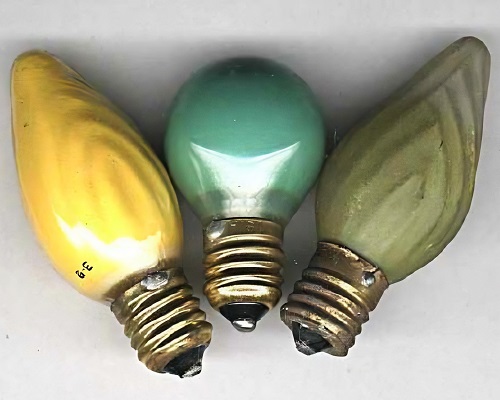
 Wilmington, DE's Community Christmas Committee popularized outdoor Christmas displays
Long before electric lights adorned homes and lawns during the holiday season, creative individuals in Delaware were already pioneering the concept of exterior Christmas decorations. In the late 19th century, these early enthusiasts crafted elaborate tableaus in their yards, combining natural elements with handmade scenery to delight neighbors and passersby.
One such display, described in the Smyrna Times on December 29, 1886, showcased not just a decorated tree, but an entire miniature landscape. The article praised the artistic efforts of Wm. H. Janney, who had created an impressive scene for his children's amusement. "In addition to the tree, which was nicely dressed by Mrs. Janney, Mr. Janney constructed it so as to rise out of a well-designed landscape, with hill and dale covered with moss, from the upper part of which a shepherd was returning with his flock of sheep," the article reported.
The display's centerpiece was a working water mill, complete with a "dusty miller" visible in the doorway. The article marveled at the intricate details: "a stream of water which flowed from among the rocks over the overshot wheel turns the machinery which is supposed to make the flour. The turning of the wheel and the flow of the stream of water over it and down the pebbly bed until lost at the foot of the hill is a tribute to Mr. Janney's constructive genius."
This early example of outdoor Christmas decoration hinted at the evolution of holiday displays in Delaware, foreshadowing the elaborate electric light shows that would emerge in the following century.
As the 20th century opened, the potential for outdoor electric Christmas displays began to capture public imagination. In 1923, the Society for Electrical Development, an electric power trade organization, recognized the untapped market for outdoor lights. They financed and publicized the first outdoor national Christmas tree, convincing President Coolidge to move the lighting ceremonies outside the White House to the Ellipse. This symbolic gesture marked a significant shift in the perception of outdoor holiday lighting.
That same year, Wilmington's Mayor Forrest established the Community Christmas Committee, which would play a crucial role in introducing the concept of personal outdoor Christmas displays to Delaware. On December 7, 1923, The Morning News reported on the committee's innovative plans: "Christmas trees, decorations and illuminations outside of the homes in this city, wherever possible, is one of the new Yuletide wrinkles adopted by Wilmington Mayor Forrest's Community Christmas Committee this year."
Miss J. Macklin Beattie, general secretary of the Young Women's Christian Association and chair of the Lawn Trees Committee, articulated the vision behind this initiative in a public appeal:
"The Mayor's Committee is making city-wide plans for a real old-fashioned Merry Christmas for Wilmington. Inside and out every house will, it is hoped, shine forth the joyful message of good will and brotherhood. When dusk falls on Christmas Eve you will light up the tree and gather around it for carols and laughter, music and song. But you know the passerby can only sense the joy within by catching glimpses of the glittering light through your window. Will you not extend the Christmas spirit in your neighborhood by lighting trees outside?"
Beattie's appeal encouraged citizens to "Make a Christmas tree on your lawn" and to ensure that "the small park near your home has its share of light shining forth." Her language evoked a sense of civic pride and community spirit, urging residents to "Let the wayfaring man feel that the City of Wilmington is indeed a City Beautiful."
Interestingly, Beattie's appeal referred to "lanterns" when discussing outdoor tree decorations. This choice of words reflects the state of outdoor lighting technology at the time. As Bill Nelson explains on his Antique Christmas Lights Site, truly practical outdoor electric lights weren't perfected until 1925. Therefore, when Beattie mentioned "lanterns," she was likely referring to traditional candle-powered lamps housed in metal cases - a precursor to the electric displays that would soon follow.
The breakthrough came in 1925 when General Electric perfected the coiled tungsten filament for 120-volt lamps. This innovation enabled cooler, more efficient outdoor lighting and allowed for parallel-wired strings, making electric Christmas lights practical for outdoor use. Seizing this opportunity, GE began sponsoring "decorating with color-light" contests nationwide.
As electric outdoor displays became more feasible, the Wilmington Community Christmas Committee continued to promote and expand the concept. In 1926, The Evening Journal reported on the committee's plans, which included an emphasis on lawn trees. Mrs. Thomas W. Wilson, the publicity committee chairman, shared a poignant example of how these displays were taking on personal significance: "One of the handsomest trees in the city is being arranged for this year as a memorial of the husband of the family, who has passed on. The tree will be a memorial to him as long as the widow lives."
The committee actively sought participants for outdoor decorating. In 1927, The News Journal reported that Miss Martha Trace, who had taken over as chair of the lawn trees sub-committee, had sent out 200 letters encouraging citizens to exhibit illuminated lawn trees and porch trees. Trace noted that she had "received many more responses, and is delighted with the enthusiasm shown by the citizens."
As the concept gained popularity, the committee expanded its vision. In 1929, The Morning News reported on Martha Trace's suggestions for alternatives to natural lawn trees. "Some of these decorations will be arranged about trees that are growing on the lawn, and others are being planned wherein artificial trees will be used," Trace explained. She further suggested, "Where it is not possible to have a lawn tree decorated, plan to have a decorated tree on the porch in front of the home. If this is not possible, because of there being no porch, we suggest an illuminated window in front of the home typifying the welcome and good fellowship of the Yuletide Season." This flexibility in approach demonstrates the committee's commitment to inclusive participation, ensuring that all residents could join in the festive outdoor decorating regardless of their property's limitations.
By 1935, the outdoor display competition had become so popular that the Community Christmas Committee had to make adjustments. The Morning News reported that "four or five outstanding trees of prominent persons on the west side of the city will not be considered in the competition." This decision likely aimed to encourage participation from ordinary citizens, ensuring that the contest remained accessible to all.
The following year marked another significant development. The News Journal reported in 1936 that the Delaware Power & Light Company was now providing prizes for the best lawn decorations. This corporate involvement reflects the growing economic potential of outdoor Christmas displays. As the primary electricity provider in Wilmington, Delaware Power & Light had a vested interest in promoting activities that increased power consumption.
The civic importance of these displays continued to grow. In 1939, The Morning News reported on the introduction of a "large silver loving cup" as a prize for the best-decorated property in the Brandywine Hills section. A loving cup, a traditional trophy with two or more handles, often used in sporting events, symbolized the communal nature of the competition. This impressive silver trophy would be passed from winner to winner each year, with names engraved to create a lasting record of excellence in holiday decorating. The use of such a prestigious award underscored the community's commitment to this festive tradition.
The same article emphasized the community-building aspect of the displays, noting that "Mayor's Community Christmas Committee has asked that lawn trees in Wilmington be lighted simultaneously at 6 o'clock tonight." This coordinated lighting created a powerful visual demonstration of civic unity and pride.
By 1940, the prize structure had expanded significantly. The News Journal reported that year that "Fourteen prizes will be awarded, three for the best trees in each of four districts in the city and two for the best at large in the city." This expansion indicates the growing popularity and competitiveness of Wilmington’s outdoor holiday decorating.
However, this flourishing tradition was about to face an unexpected challenge. With the United States' entry into World War II, priorities shifted dramatically. In November 1942, The News Journal reported that "Lighting of lawn Christmas trees in the Wilmington area this year is to be left largely to the individual." The article cited requests from the War Production Board for conservation of critical materials, leading to the elimination of much of the customary outdoor decorative public lighting.
Support for this move was strong, as evidenced by an editorial in The Morning News on November 28, 1942: "In deciding against illuminated lawn trees in Wilmington during the coming Christmas season the committee which has charge of such matters is pursuing a wise course, and one, incidentally, which is in keeping with the federal government's wish. As it is in the interest of public safety there can be no reasonable objection."
Yet, even as the community rallied behind the wartime restrictions, the absence of the beloved displays was keenly felt. Columnist Bill Frank captured this sentiment in The News Journal in 1943: "I miss the outdoor lighting. The suburbs and residential districts took on an atmosphere of real Christmas spirit—the lawn trees illuminated, the doorways inviting, and candles in the windows. It was a pleasure in the past to drive along the lonely country roads and see the friendly lights of homes tucked away down in the lanes or in the woods."
Frank's nostalgia demonstrates how deeply the tradition of outdoor Christmas displays had taken root in Wilmington over just two decades. What had begun as a novel idea promoted by the Community Christmas Committee had evolved into a cherished holiday tradition, one that residents longed for even in its absence.
The end of the war brought hope for a return to pre-war traditions, but new challenges emerged. On December 20, 1945, The News Journal reported: "Christmas lights will be on all over the world this year for the first time in seven years—in Delaware for the first time in five years— but bulbs for Christmas tree strings are more scarce than metal toys for children."
The article detailed the paucity of Christmas light bulbs in Wilmington stores, noting that "Tree bulbs, which sold for approximately $1 a string in pre-war years, were virtually non-existent in Wilmington stores today, a shopping tour in downtown stores indicated." The few bulbs that did make it to store shelves were quickly snatched up by eager customers.
Manufacturers explained the shortage. General Electric stated, "Our bulb-making machines out in Cleveland were used to make bulbs for proximity fuses during the war and we didn't have time to reconvert before Christmas." Russell E. Ebersole, lamp sales manager for Westinghouse, added, "We used our Christmas tree bulb machines to turn out flashlight bulbs for the Army and Navy—millions and millions of them."
As families dug through attics and basements for old light strings, it became clear that the return to pre-war levels of outdoor holiday lighting would take time. Yet, this temporary setback was just that—temporary. The enthusiasm for outdoor Christmas displays, cultivated over two decades by Wilmington's Community Christmas Committee, shone too brightly to be permanently dimmed.
The post-war shortage of Christmas lights briefly interrupted what would soon be a nationwide surge in outdoor holiday decorating. Initiatives like Wilmington's Community Christmas Committee set the stage for outdoor displays to become a key part of American Christmas traditions.
The Committee's efforts brought joy and civic pride to Wilmington, shaping a new facet of holiday culture that would endure and expand for decades.
|









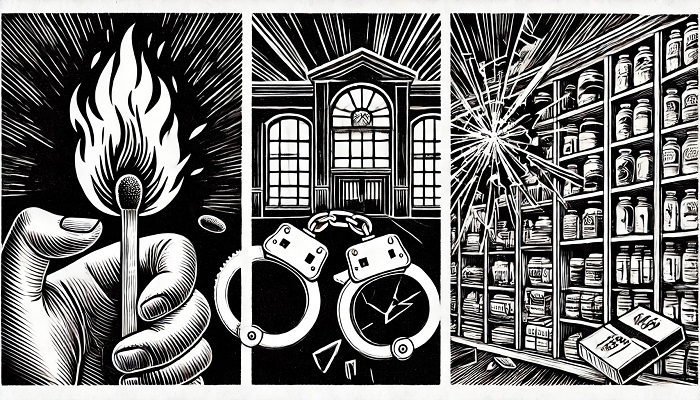

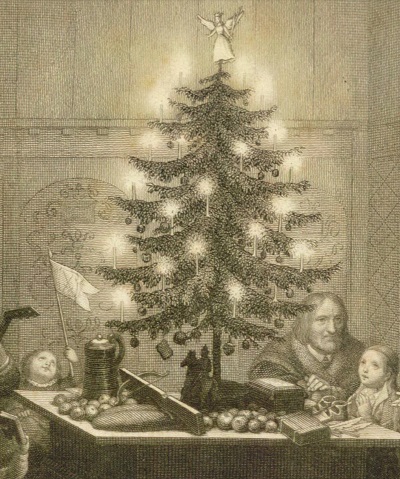

Prior to electricity, that was also dangerous, I have learned that many people burned candles on their Christmas trees in the house. A very dangerous thing to do. I can imagine what it was like
in late December having your house burned down leaving you out in the cold because of a Christmas tradition.
Ron