Whoever thought that a fungus that kills trees
Would become such a tradition for Christmas?
Young and Old stand under the mistletoe
With their faces all a glow
Love can blossom or be rekindled
And even the intravert will mingle
The troubles of the past melt away
When under the mistletoe you play
The fungus brings love and laughter
With the hopes of happily ever after
The kids are appalled at their parents display
And roll their eyes in dismay
Laughter rings throughout the house
And even Grandma loves her spouse
Maybe only for the day but hey...
Grandpa takes things day by day!
Have a Mistletoe Christmas, Ya'll
Love and Dreams,
Karen Elaine McKeever


 Share
Share Print
Print Save
Save Follow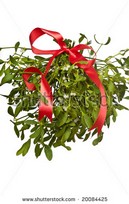





Regis
But did you know:
The rarer oak mistletoe was an important religious component of the ancient Celtic Druids and Germans and later used as a ritual plant by early Europeans. The Greeks and earlier peoples ascribed mystical powers to mistletoe, in part because it stayed green during the barren winter months.
Mistletoe was long regarded by ancient peoples as a fertility symbol, and Celts thought it contained the "soul" of the oak. It was gathered at both the summer and winter solstices. The long-standing custom of using mistletoe to decorate houses at Christmas is said to be a survival of pre-Christian traditions.
The word mistletoe originated from the perception in pre-scientific Europe that mistletoe plants magically burst forth from the excrement of the mistle thrush. Ancients observed that mistletoe would often appear on a branch where these birds had left droppings. "Mistel" is the Anglo-Saxon word for dung, and "tan" is the word for twig. So, mistletoe is literally translated as "dung-on-a-twig." Ahh, romance.
Love it! Just had to Karen :)
Happy Holidays Darlin'
Love and Light
Lily
Love ya!
Jane
Joy L. Hale
budd