"But that mimosa grove - the haze of stars, the tingle, the flame, the honey-dew, and the ache remained with me, and that little girl with her seaside limbs and ardent tongue haunted me ever since." Vladimir Nabokov
Gently perfumed
Pink puffs of prettiness
Sprout
From amidst
Pale green leaflets
That stem from
Sturdy branches,
Which, in turn, reach outward
From a strong
Grayish-brown trunk.
It is, perhaps,
The perfect tree
For a child to climb,
Not so tall
As to threaten real harm
From taking
A tumble,
But still plenty tall
To spot pirates on yon horizon
Or to practice one’s best
Tarzan call.
I have many memories
Of many mimosas
And I object
To their being labeled
As mere weeds.
I believe that they
Are the stuff of which
A million children’s dreams
Are born,
And a few grown women’s
As well.
After all,
Who can resist the gift
Of a fragile pink mimosa blossom?
What a wonderful way to describe the ubiquitous, wild mimosa that grows readily amidst other trees in the South of the United States. You have given it a great honor by describing it so beautifully.
When I arrived in Houston in 1981, particularly in the poorer parts of town, many of the trees, mostly loblolly pine and a variety of oaks, died when water pumped from wells lowered the groundwater level. But the mimosa survived and graced many front yards with their pink blooms and nicely shaped canopy. There were large azalea in front of many of the older homes, too.
Some loblolly pine have been replanted, but landscaping is all about live oak and crêpe myrtle. All of the original mimosa and azalea are gone. It's a real shame. Thanks for reminding me of a plant I admired when most people didn't understand its beauty.
Explore the mystery of how nature makes unexpected gifts of creative wonders to an unsuspecting caregiver one late night and early morning in southeastern Georgia, USA.




 Share
Share Print
Print Save
Save Follow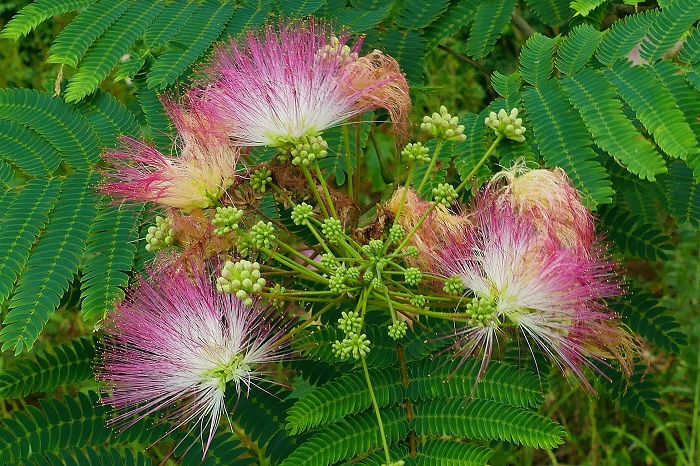












By the way, love Nabokov and the quote. What a master stylist he was.
When I arrived in Houston in 1981, particularly in the poorer parts of town, many of the trees, mostly loblolly pine and a variety of oaks, died when water pumped from wells lowered the groundwater level. But the mimosa survived and graced many front yards with their pink blooms and nicely shaped canopy. There were large azalea in front of many of the older homes, too.
Some loblolly pine have been replanted, but landscaping is all about live oak and crêpe myrtle. All of the original mimosa and azalea are gone. It's a real shame. Thanks for reminding me of a plant I admired when most people didn't understand its beauty.
Ron
Fee